
A few thoughts–pensées–today, but first the usual travelogue/diary of life in Marseille…
June 1…We took public transportation to Jean-Claude Gaudin Parc, by far the nicest and most toddler friendly green space we have encountered.
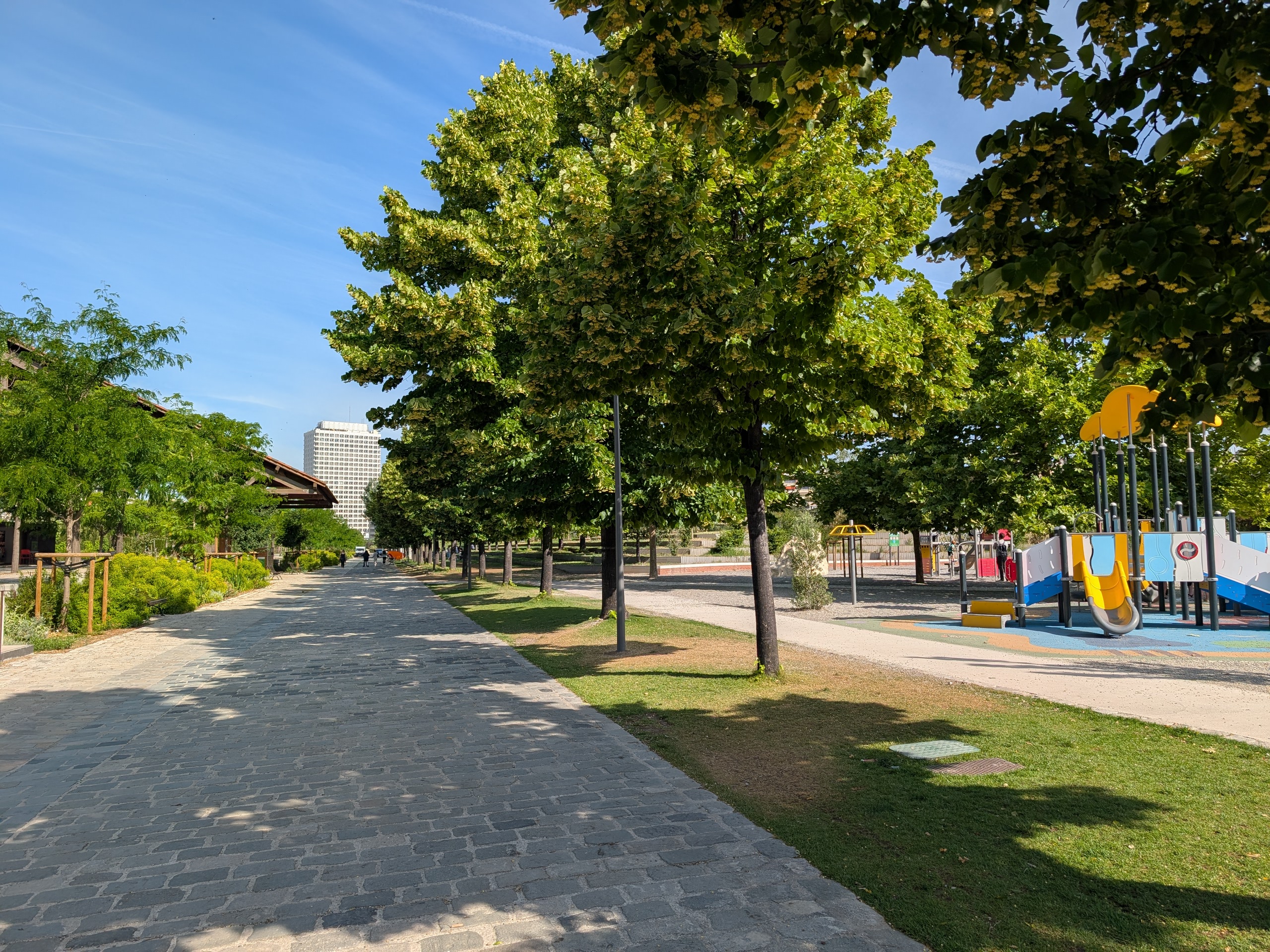
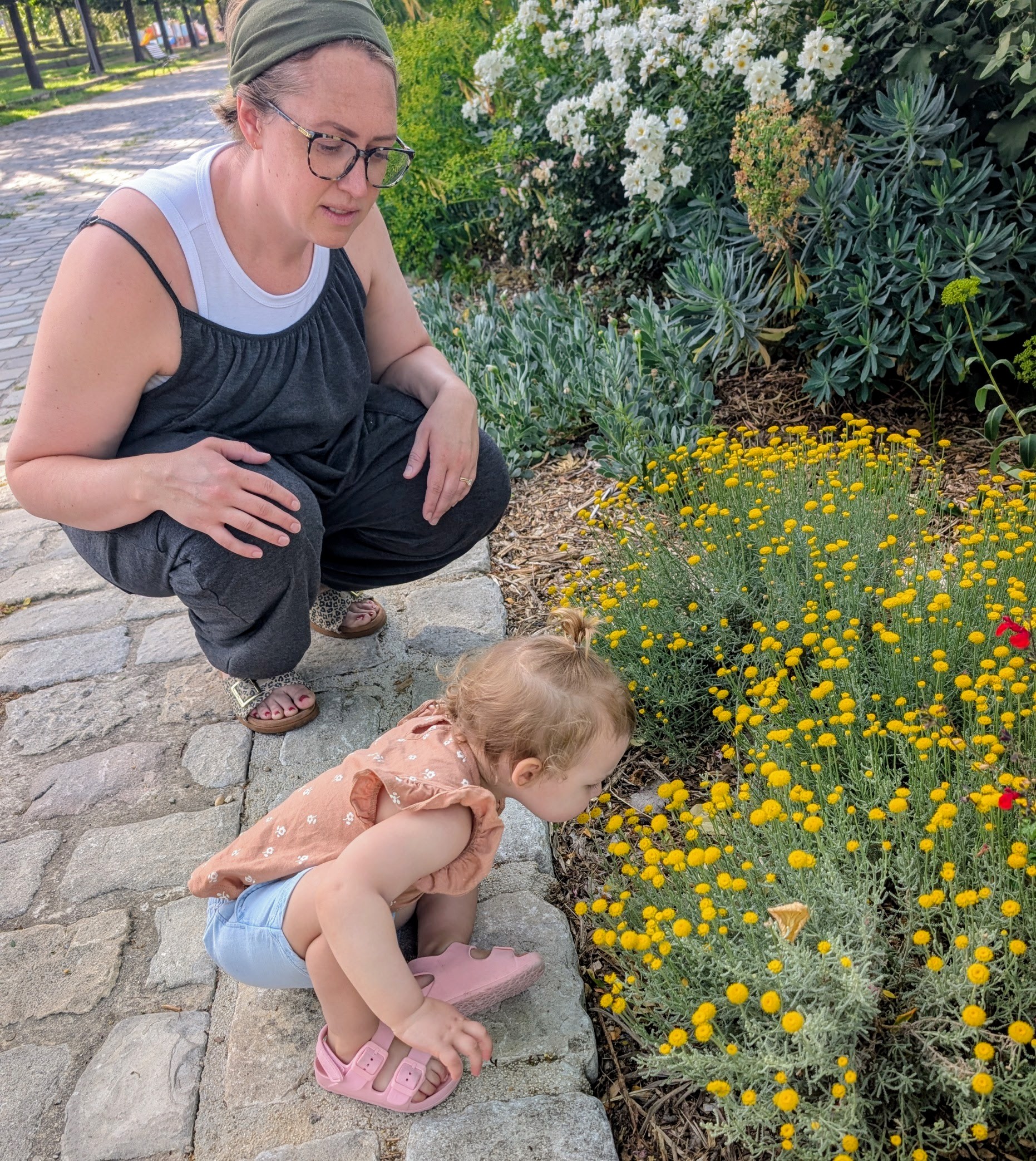
It was a warm but lovely day. A beautiful aspect of this park is that the linden trees scent the air! A sweet respite from the naturally funky smells that are inherent to a large city. We literally stopped to smell the flowers here!
We had a little pastry and café in a pavilion on the grounds. I took the opportunity to ask the proprietor where I might find a guichet, an ATM. He directed me to a spot about a ten minute walk away, where I was relieved to find a working machine in what felt like a secure place.
There is not much else to tell about that day. I cleaned the apartment with the materials at hand. While it is a small space, it is roomy enough for the four of us. And it takes a lot less time to clean than our house back home!
June 2…Karen, Sydney and I took the Metro to the Old Port. A very beautiful place that gets busy with cruise passengers coming ashore. It wasn’t crowded at all on Tuesday.
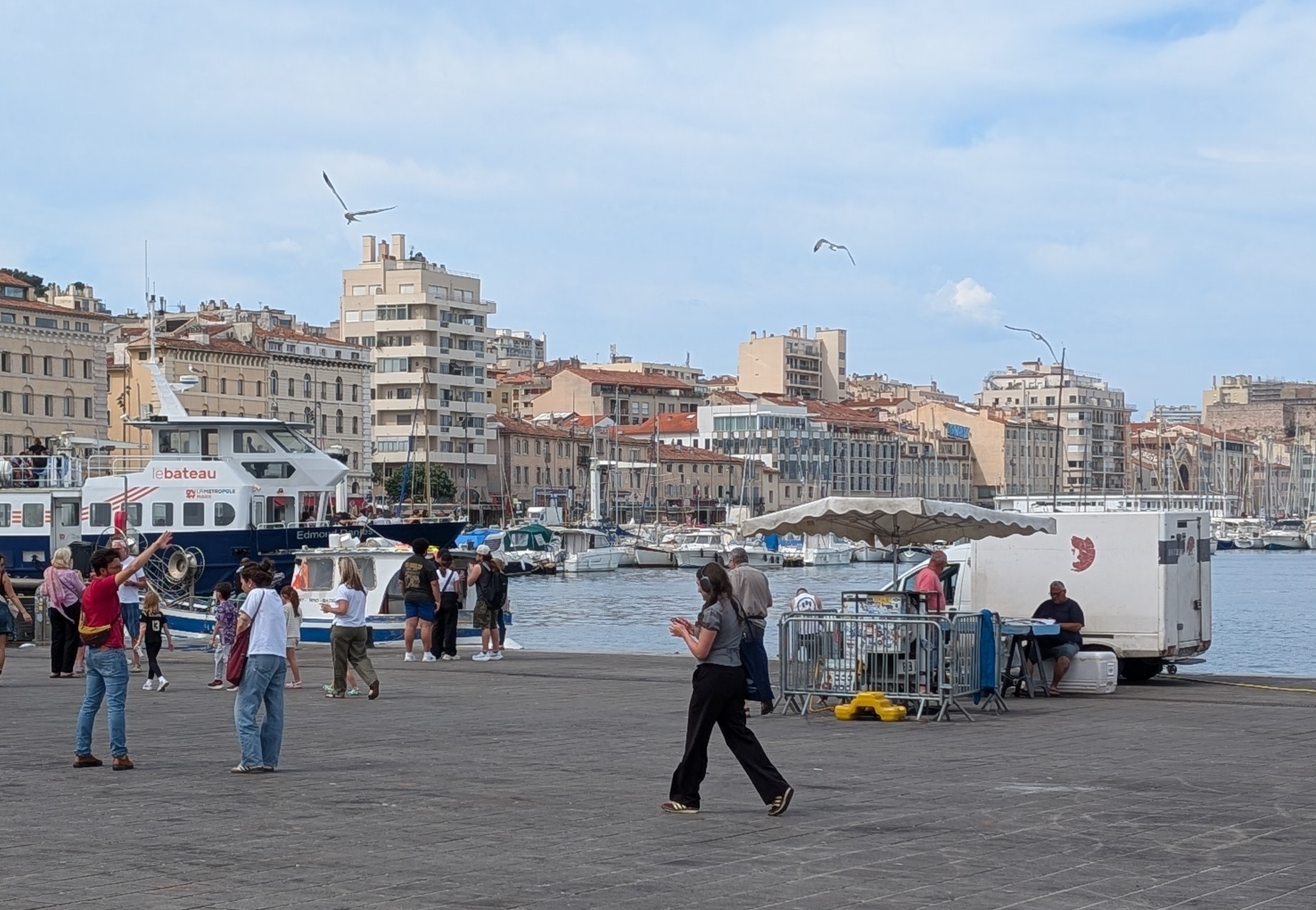
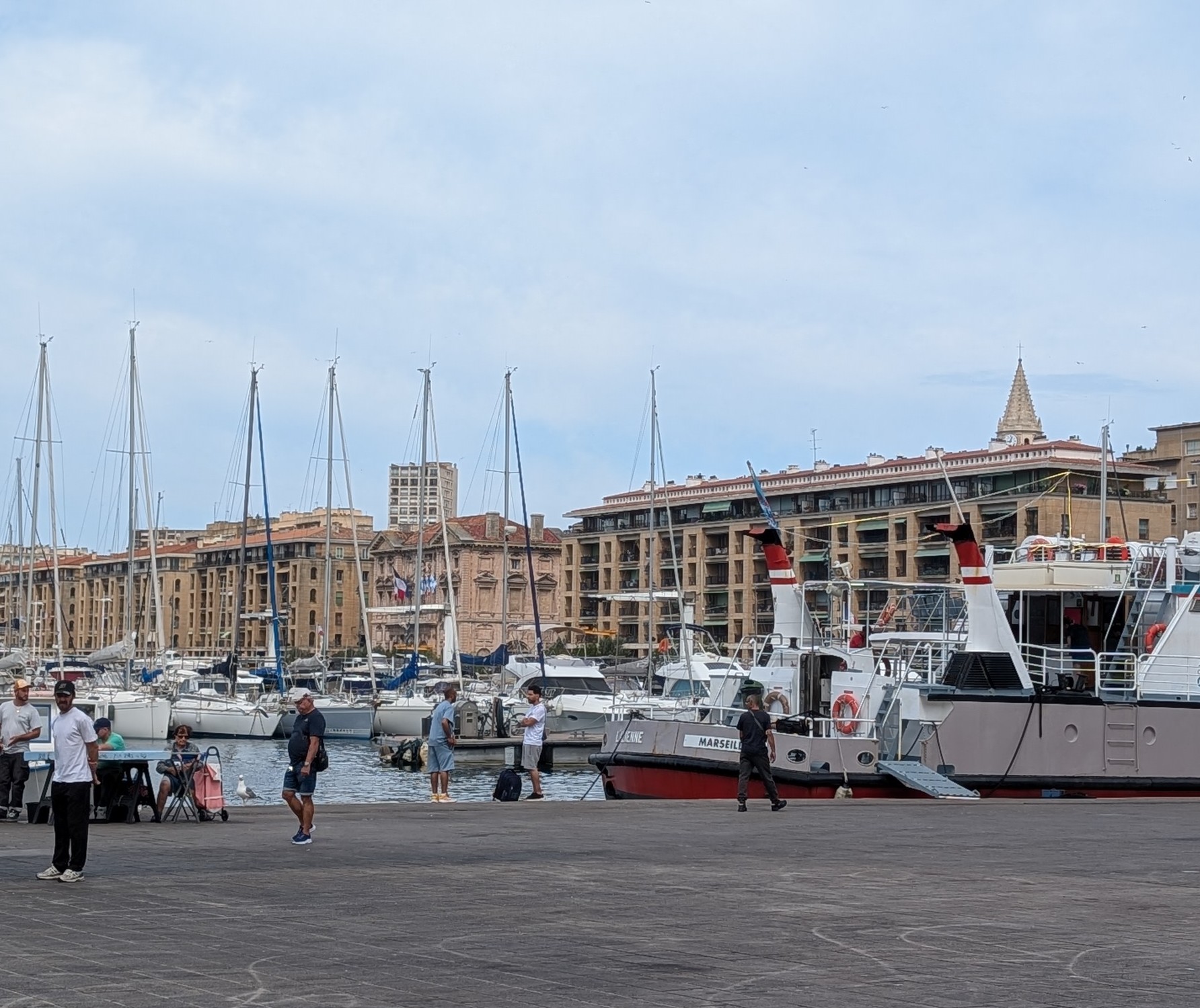
Marseille was established as a port around 600 BC! The only thing I can use as a reference point is the fall of the southern Israelite kingdom around the same time, when Nebuchadnezzar II besieged Jerusalem, and a large number of Judeans were exiled to Babylon. The present architecture is not nearly that old, of course. But it boggles the mind nevertheless!
First order of business for us: find a patisserie for coffee and a pastry. Not hard to do!
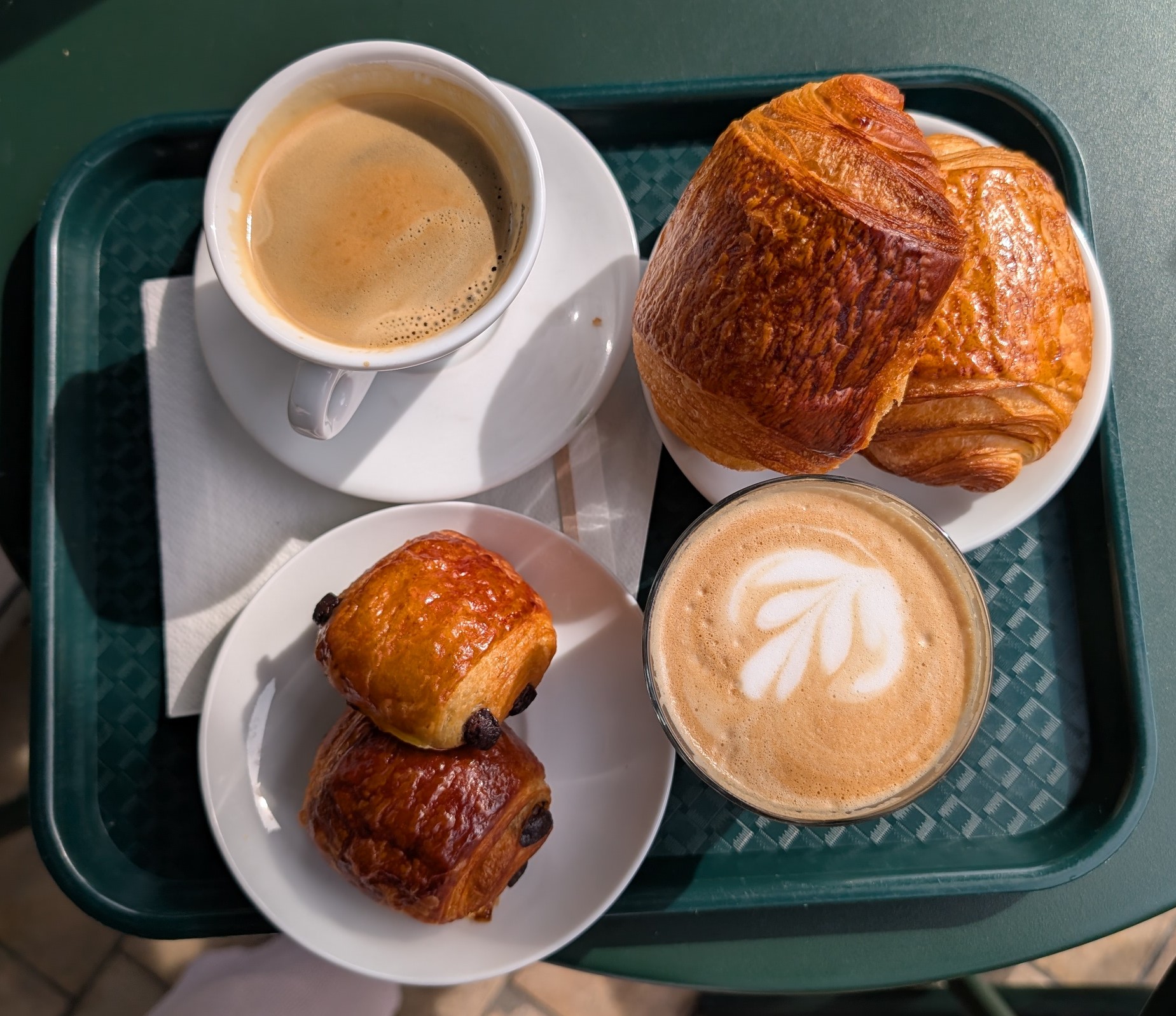
We could not resist ordering les pains au chocolat, what we call chocolate croissants in the U.S. Delicieux! I’m not an esspresso drinker, which is what you get if you order coffee here. For something closer to our regular coffee, an Americano (espresso with water) is best, or what we learned here is referred to as an allonge. I’m order café au lait, here, since I always add cream to my coffee. Such is my way since I only began drinking coffee about 17 years ago, in Rome. (My family told me if I were ever going to drink it, I should have it there, and I was hooked.)
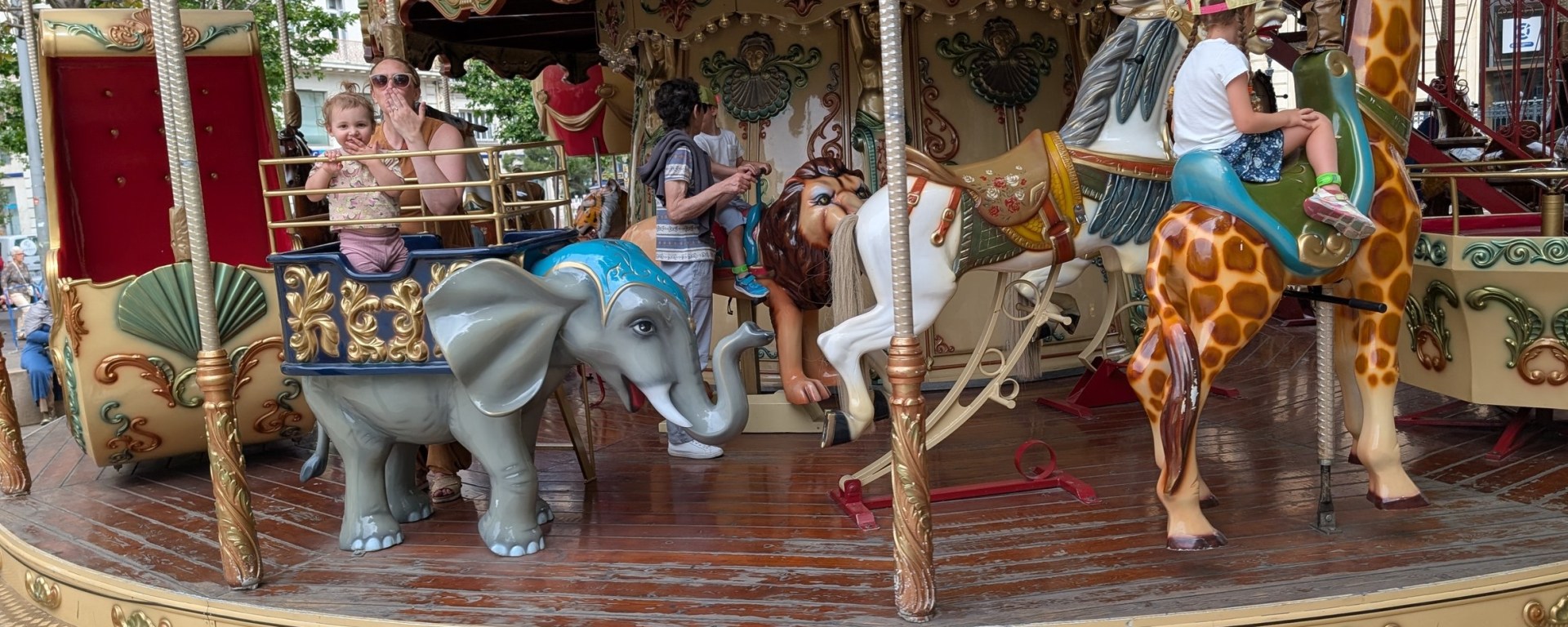
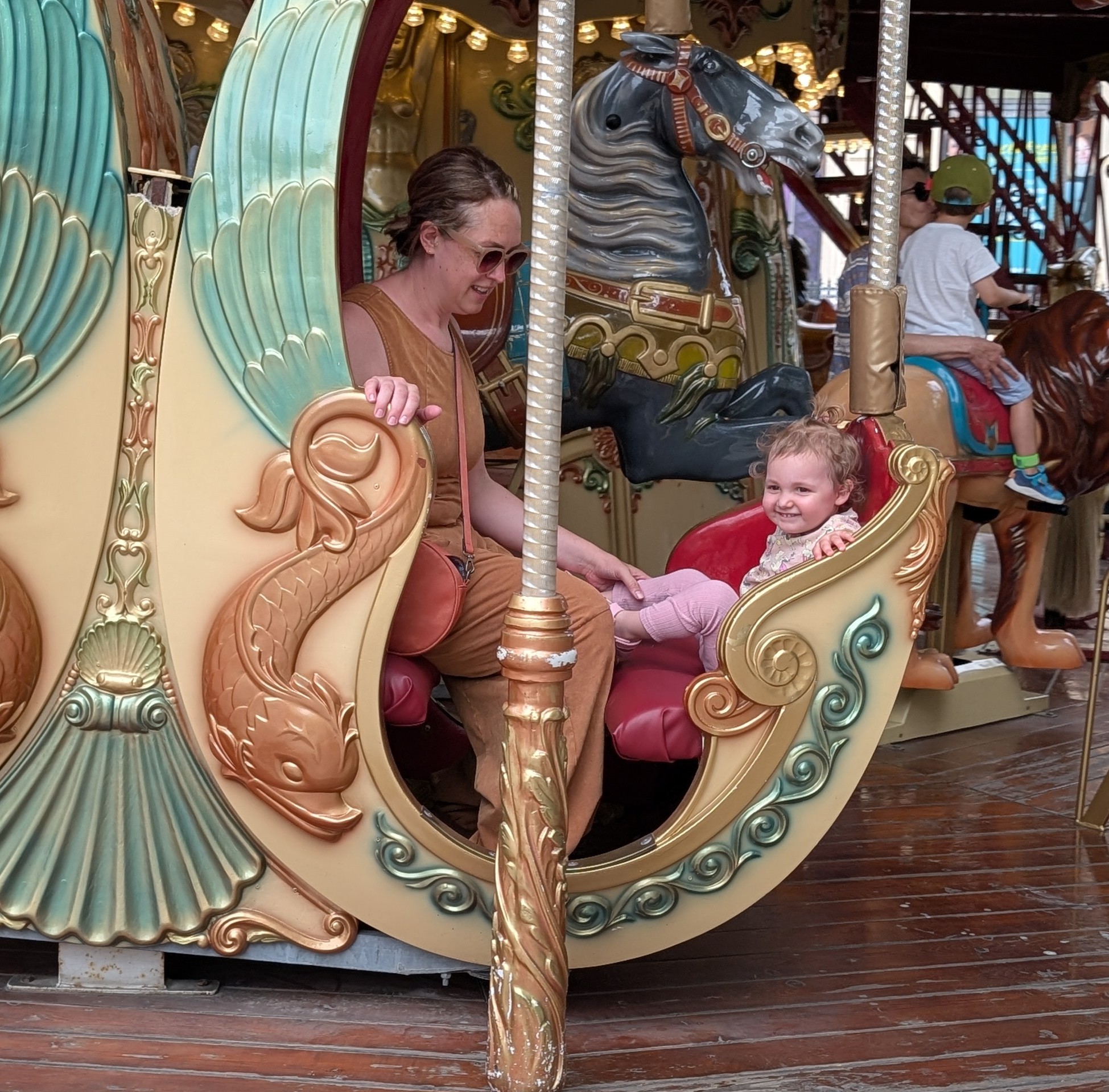
At the Old Port we bought a few souvenirs, but that was not the highlight for Sydney. She flipped out when we discovered a carrousel. Another difference from the US: no straps or attendants on the ride. So of course our toddler took advantage and asked Mama to move her from the elephant to the horse to the bench and back again. But with an eight-minute ride (I timed it), there was plenty of time for that.
The only other notable thing on Tuesday, June 2 was a trip to a local gelateria. My first intro to this wonderful treat was in Rome. Gelato has much more intense flavor and less dairy in it than ice cream. I informed my husband that we were doing research for him that day, since two of his very favorite treats are chocolate croissants and gelato. It’s a tough job…
So, some thoughts in this old head of mine. Option: stop reading here if you don’t feel like going deep today!
As I lay in bed a few nights ago, I checked in with my body. There was a sort of empty feeling there that felt like a question: Who am I when I am removed from everything that is familiar to me? When I am without my husband, my home, my stuff?
This is not unlike the questions that arose–and disturbed me–when I retired from my active ministry in the church four+ years ago. Who was I when not acting as a pastor? I have talked with fellow retirees about this, and every single one also went through some feelings of disorientation, if not downright depression. It seems to me that this experience of a long sojourn abroad feels somewhat the same. I wouldn’t describe it as being disturbed, but because I’m paying attention to my inner landscape, I do notice the familiarity of it.
I think this is a good thing to ponder periodically in one’s life. For many years I struggled with a “search for significance” as I read about in Viktor Frankl’s Man’s Search for Meaning. He dealt with this in the most extreme of circumstances, the sense of loss and devastation befalling millions in a concentration camp in Germany.
In my own struggle, with the help of good books, prayerful journaling, and both a therapist and a spiritual director periodically, I came to a deep mystical knowing that when everything else is stripped away, there is one essential truth: we are beloved. I am beloved. The Great Love we call God is the one who deems us precious simply because we exist. I love what Jim Finley says about this: if God were to stop loving us, we would cease to exist.
So I don’t have to have access to my car or my bed or my books, nor do I even have to have my precious family, in order to be what is most essential, a beloved being who has this in common with every other human being. I can come to France and enjoy exploring a different place in this world where everyone else is also beloved. Where their customs and their arts and their work arise out of God’s love for every single person and thing.
Which leads to other thoughts.
At the Old Port there are a number of beggars behind the shiny exterior first glimpsed from the pier. I was especially affected by a woman sitting near the souvenir shop, just around the corner from the carrousel where two rides cost five euros. She had a baby lying in her lap and a little boy, maybe five years old, sitting nearby. They were not emaciated or anything, but they had a McDonald’s cup set out for money.
What is her story, I wonder. Is it her choice to do this, or is she being exploited by someone? As I drop a few coins in her cup, I realize I cannot make any assumptions about her situation or where the money will be used. But as has always been the practice for my husband and me when we encounter someone needing help, I don’t analyze. I don’t want any other people’s ideas about the poor to affect my generosity. I don’t want to assume that anyone is unworthy of my help. In God’s eyes, everyone is beloved, and everyone has to answer to God and not to me with regard to the help that is offered.
Now that all sounds like a decent enough philosophy, but I am left with the question: why her and not me? I have never liked the phrase, “There but for the grace of God, go I.” That implies that God doled out some goodness to me and not to other people, whether randomly or intentionally. More to the point: what is my responsibility to my fellow human? A few coins dropped in a cup feels inadequate, but not doing it feels callous.
But it is not about me. It is about the suffering that is inherent to the human race.
The conclusion I have come to many years ago is this. I am responsible for my fellow human beings as far as it is in my power to help. We are all in this together! So many people are suffering through no fault of their own. And even if it seems like their fault, I cannot condemn them. I do not know their story, what it is that compelled them to make “bad” decisions. So, I help those I can help and say a quick prayer for those I pass by. I don’t give to every charity because I do give to the ones it seems my place to benefit. There are individuals we help because they need it, and we can do something immediately. When I encounter a poor woman I can feel empathy, even guilt, and simply know that it is a normal human reaction. And I can remember her for the rest of the day, and pray for her.
If you want to read more about being beloved, I highly recommend Cherished Belonging by Fr. Greg Boyle. I went through this book with several other people last year, and every single one was deeply affected by his wisdom. Check it out!
À bientôt! See you soon!

