
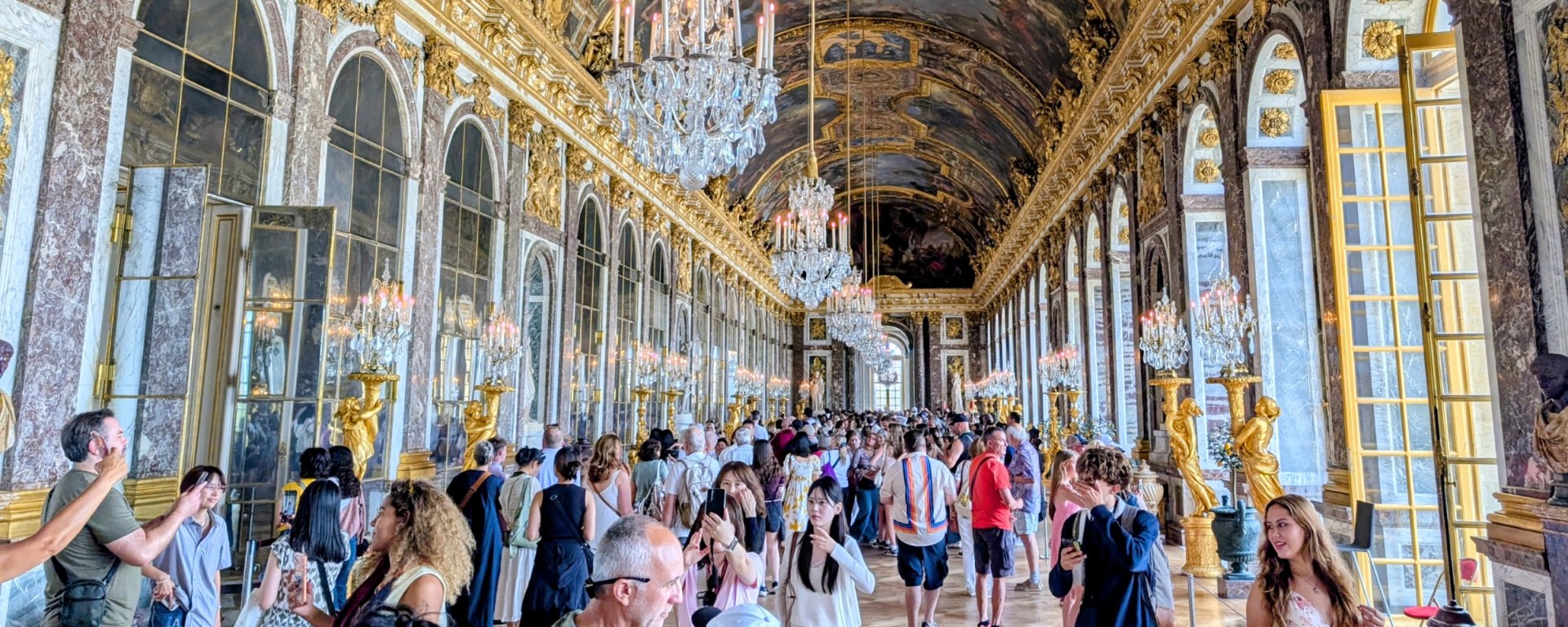
June 30, 2026. Our last full day in France, for now. We had booked a small group guided tour of Versailles along with pickup in the city. Well, “pickup” is generous: we met our guide, who distributed train tickets and chatted with us on the 30-minute train ride. But that was OK. Sometimes you just want somebody else to figure stuff out. And now we know how simple it is to get to Versailles!
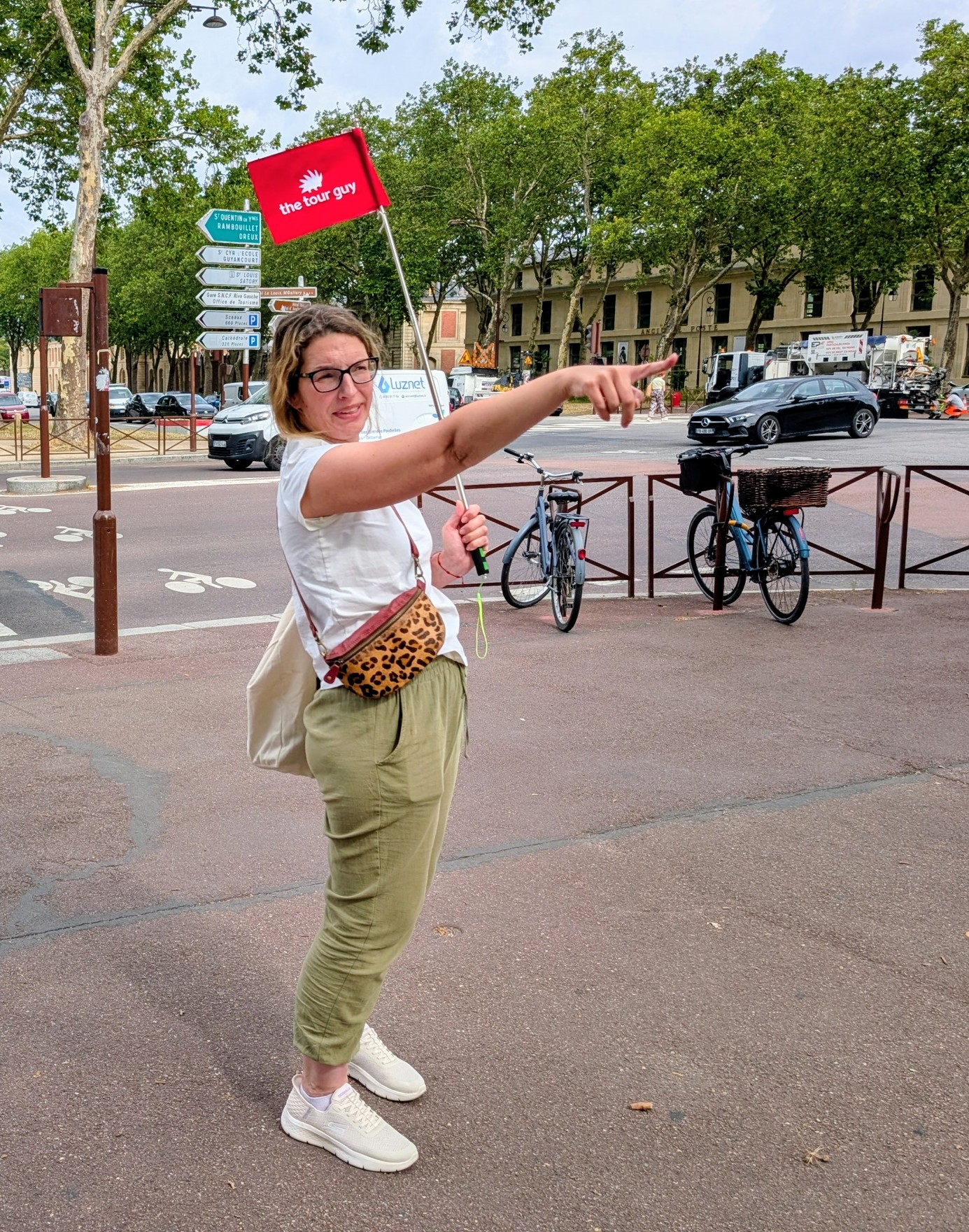
Dunya was a delightful guide, with a fun Serbian accent and hilarious side commentary to go along with the historical narrative.
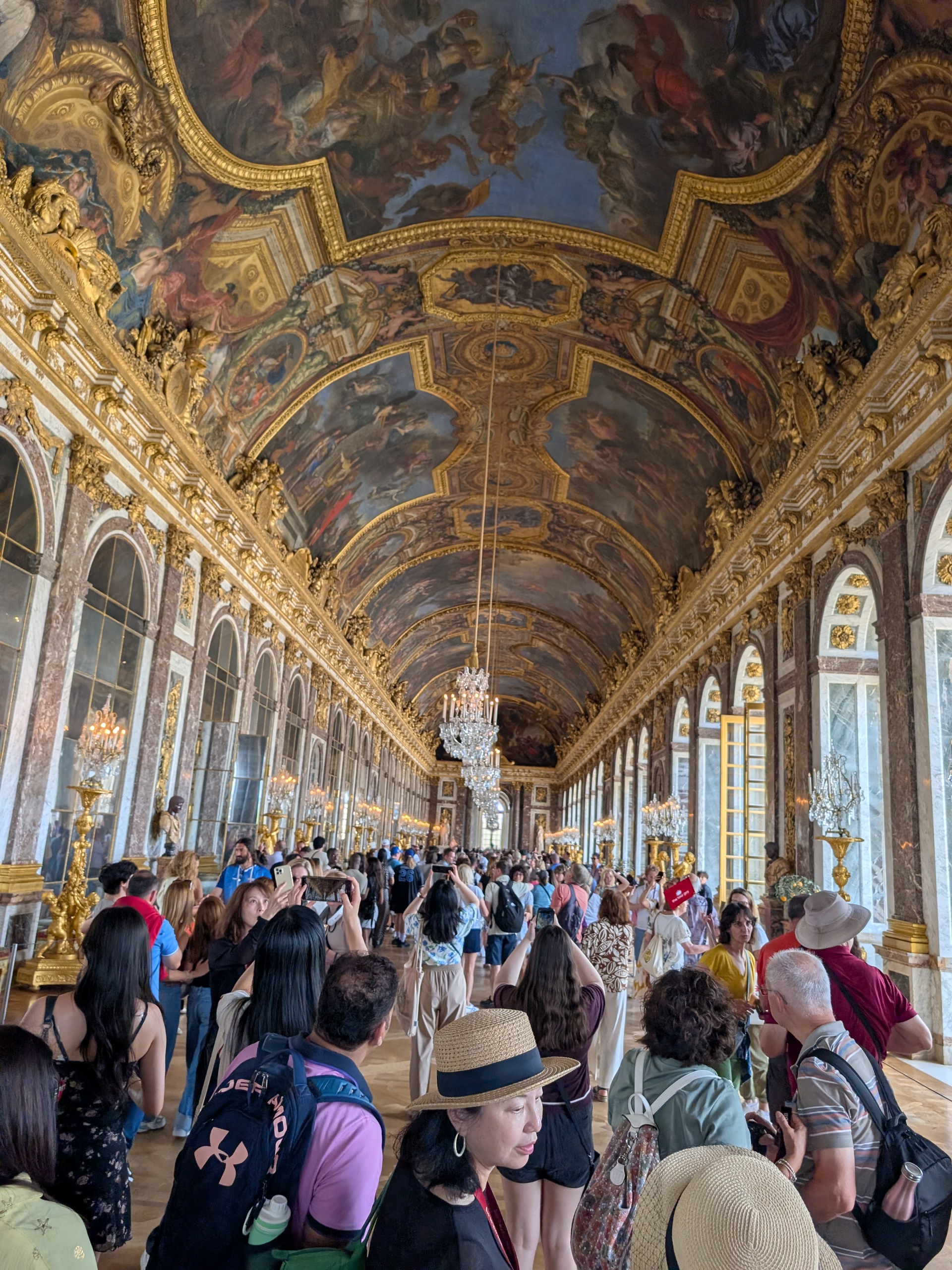
She also told us exactly what to expect, how to find the train station later, and what she was able and not able to do for us as a guide while in the palace. When we went into each room, she said things like, “I’m going to the left now,” because believe me, it was CROWDED (Tuesdays are especially like that apparently), and it would be easy to lose sight of her little flag in the congestion.
Normally an hour on our feet would be very painful for both Dean and me, but the old, creaky parquet floors were very forgiving. We endured for almost two hours. Yay! We would not have wanted to miss a moment of the dazzling sights and Dunya’s expert guidance.
So, Versailles. Constructed by Louis XIV, the longest reigning monarch in French history (72 years and 110 days). Megalomaniac, egoist, king. He was succeeded on the throne by his great grandson Louis XV, because he outlived his son and grandson. You might remember that the next one on the throne, Louis XVI, was the last of his line due to the French Revolution. (Did I remember all of this from our tour or from my high school paper on the French Revolution? Au contraire. Wikipedia helps.)
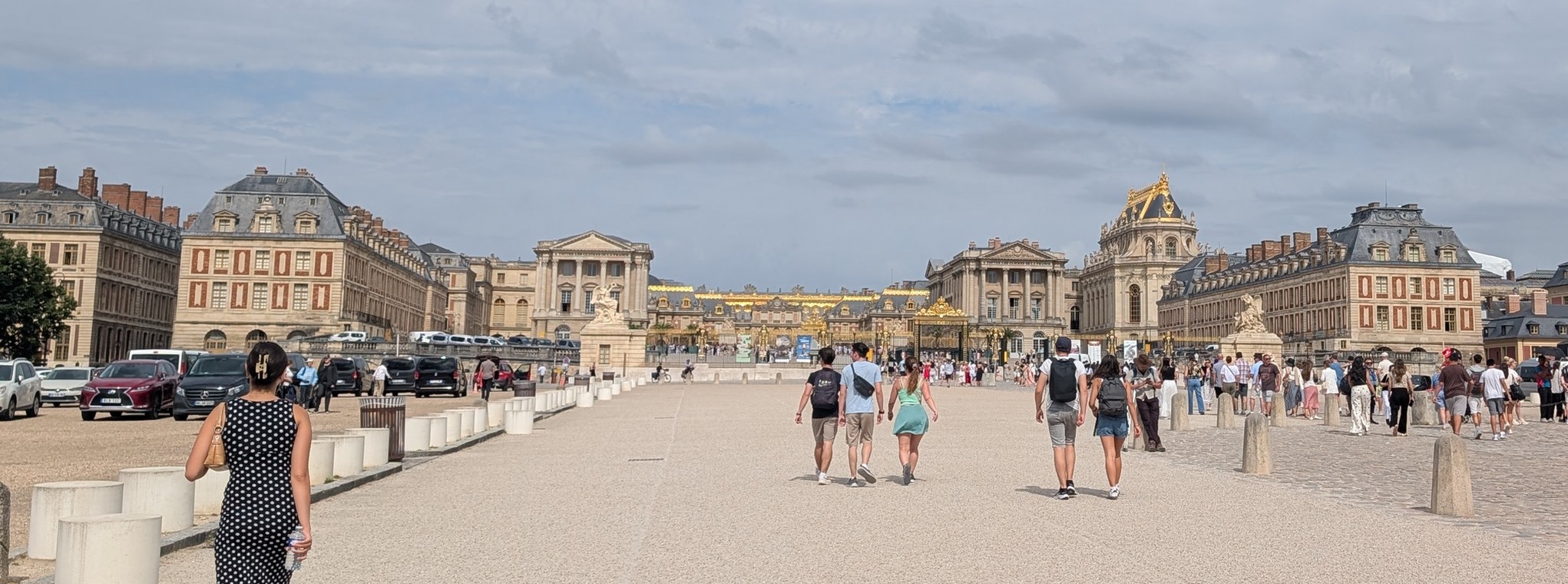
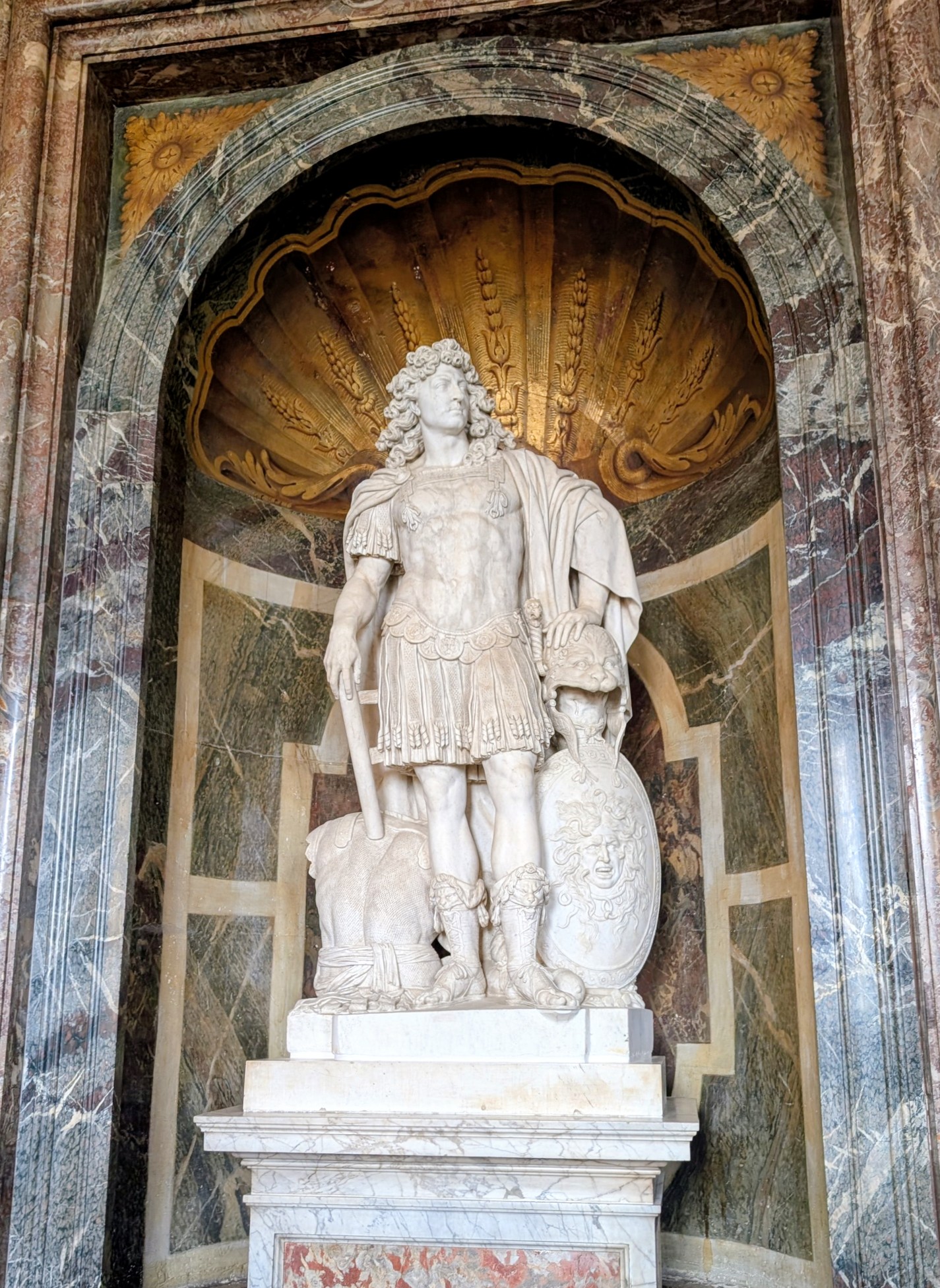
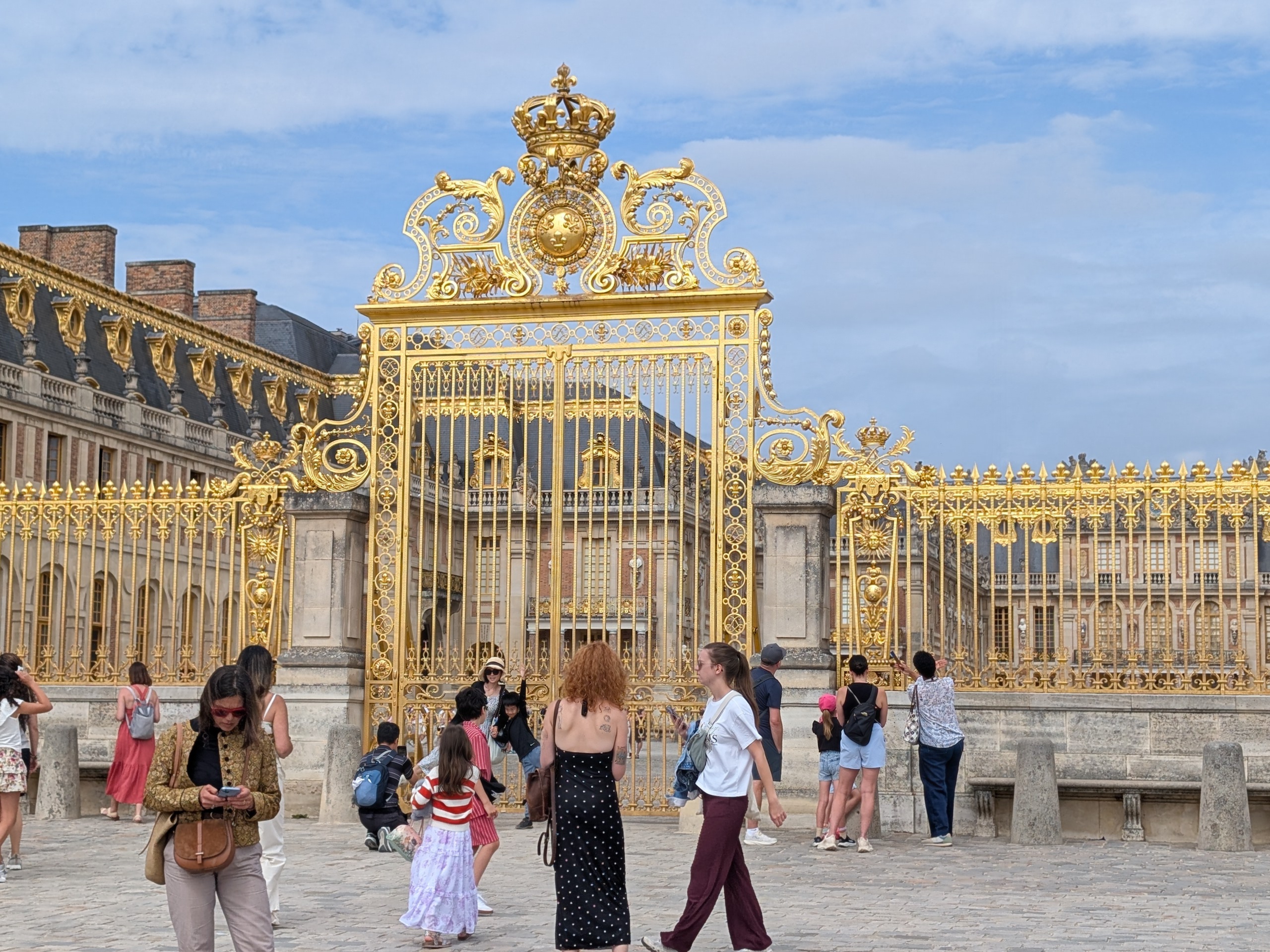
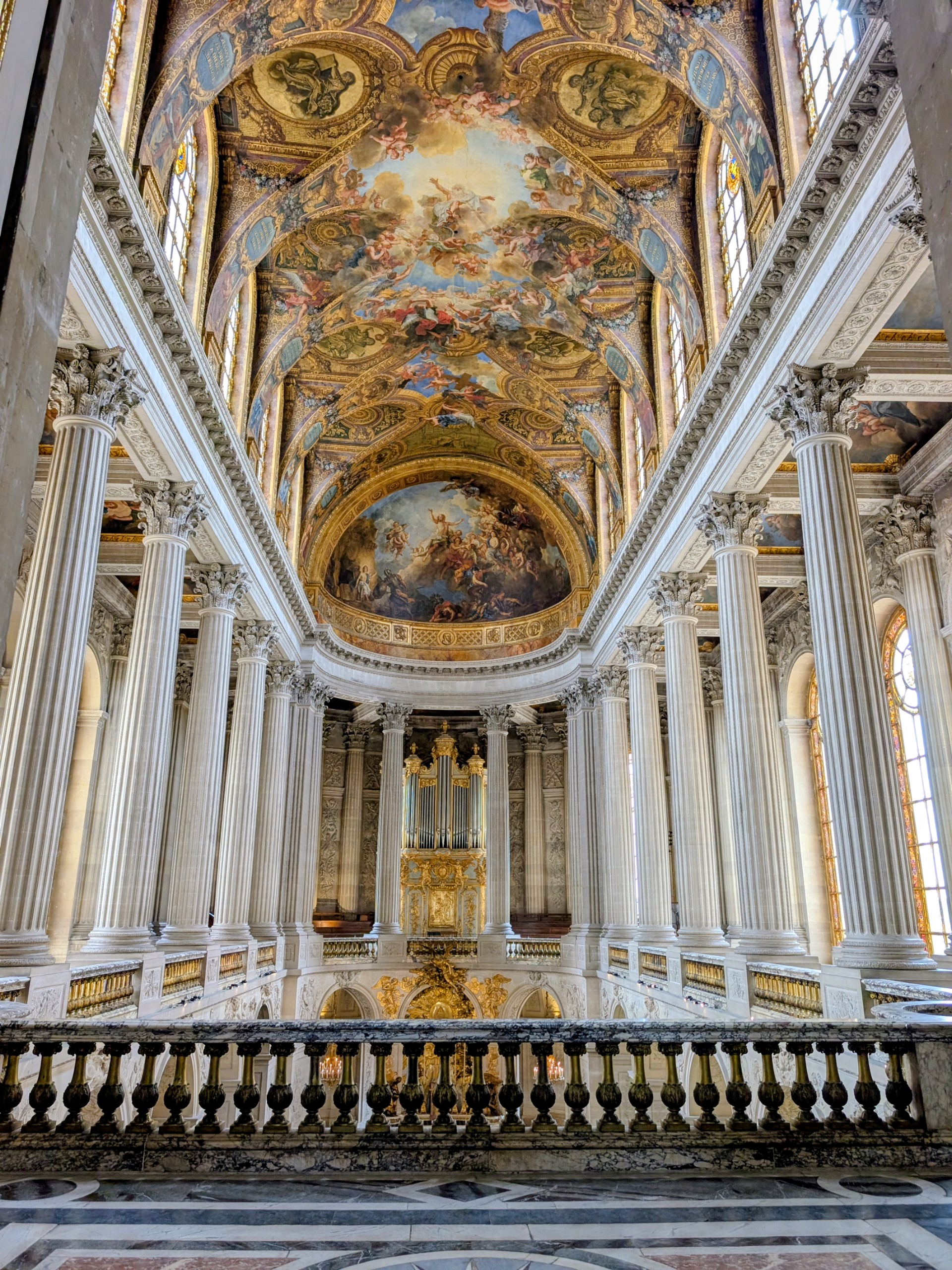
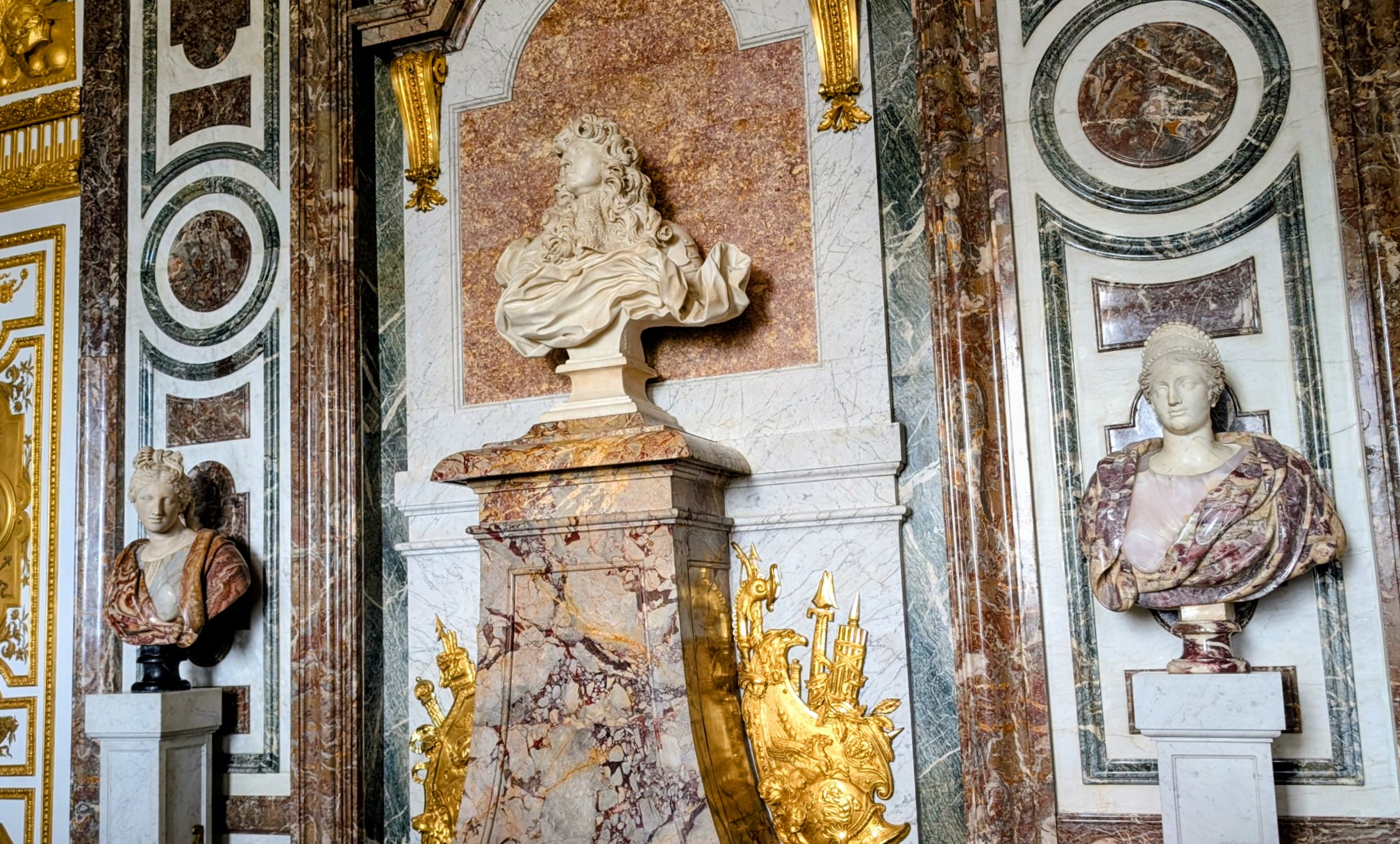
Versailles defined the baroque style of French architecture. There were successions of rooms to pass through before one could see the king. Everything had to be opulent. Every. Single. Thing. Some examples shown here: the second of two gates, the chapel where the king had to make an appearance twice a day, and of course another statue depicting oneself in far better physical shape than in real life. Requisite busts. (How do they create those with different stones? There are similar ones in the Musée D’Orsay, and I’m fascinated.)
And there are the bedchambers. What a burden, as royalty, to have an audience for getting up and going to bed. Seriously, an audience every single time. To make sure the king and queen are still alive, apparently. And they didn’t actually sleep in those ceremonial beds. But the spectacle at least took place on a stage worthy of the event. Regardez…
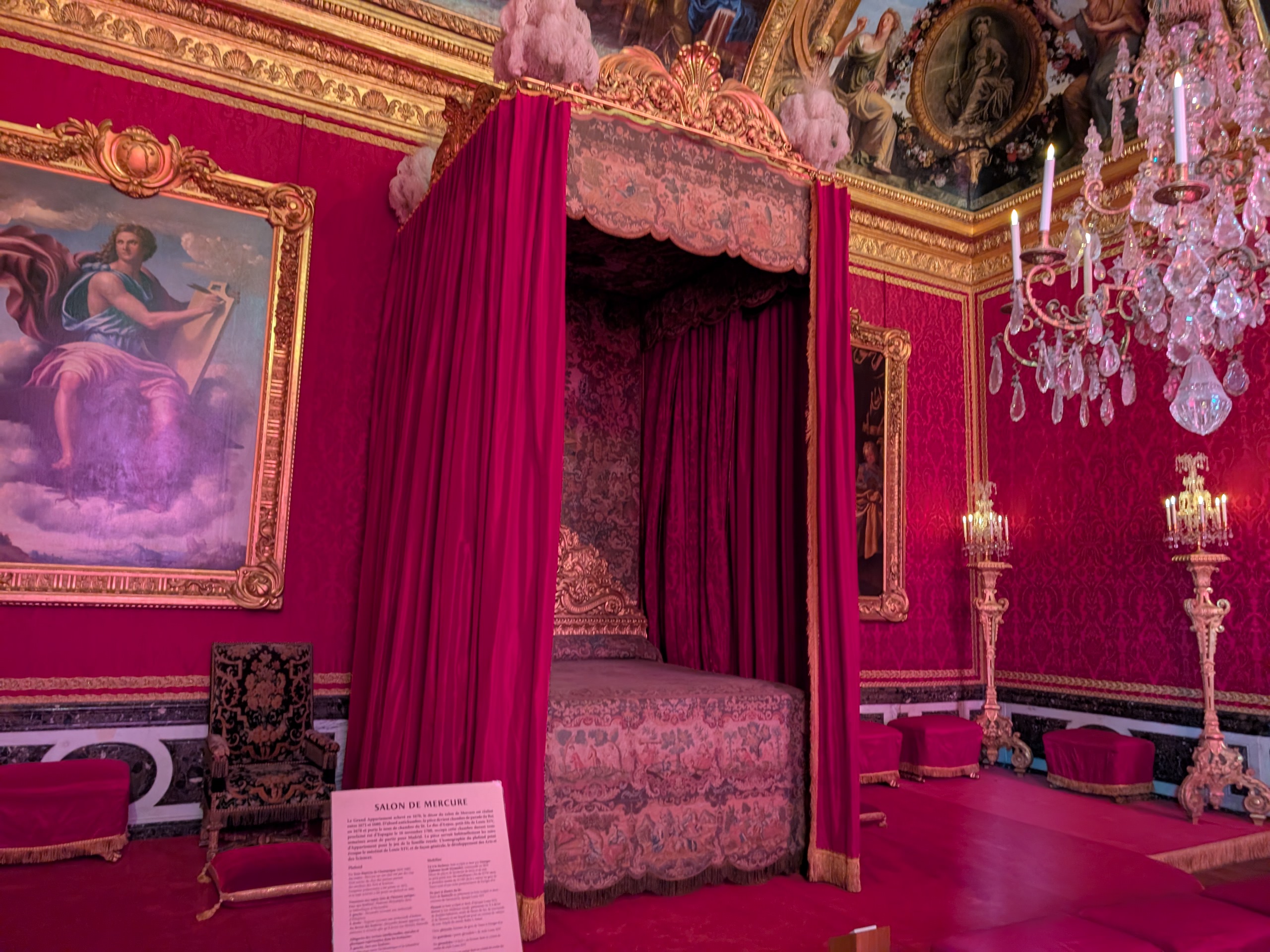
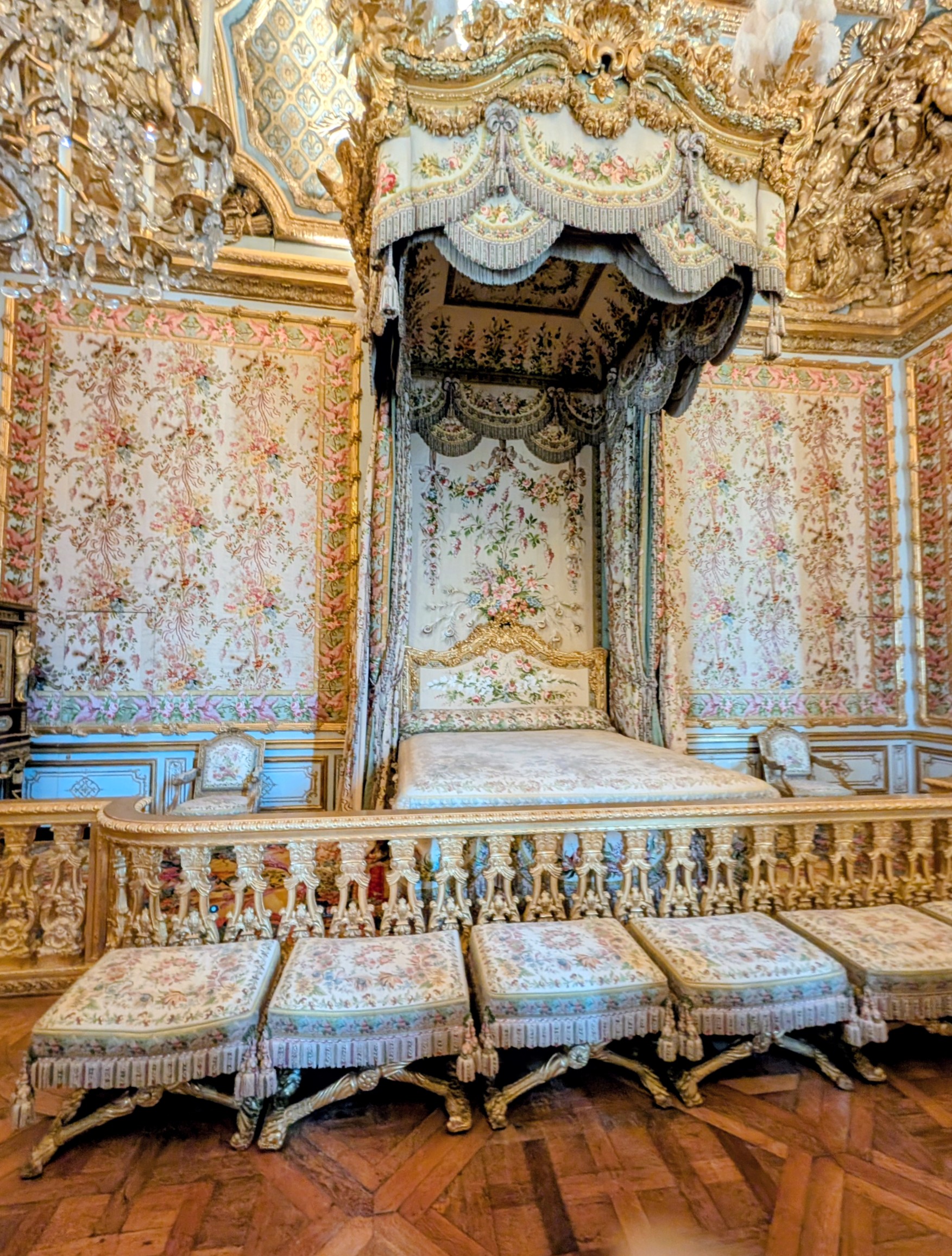
And let’s not forget the queen’s jewelry box. Was it big enough? Who knows? And did it have one of those little ballerinas that twirl to the music when you open it? I’m guessing non.
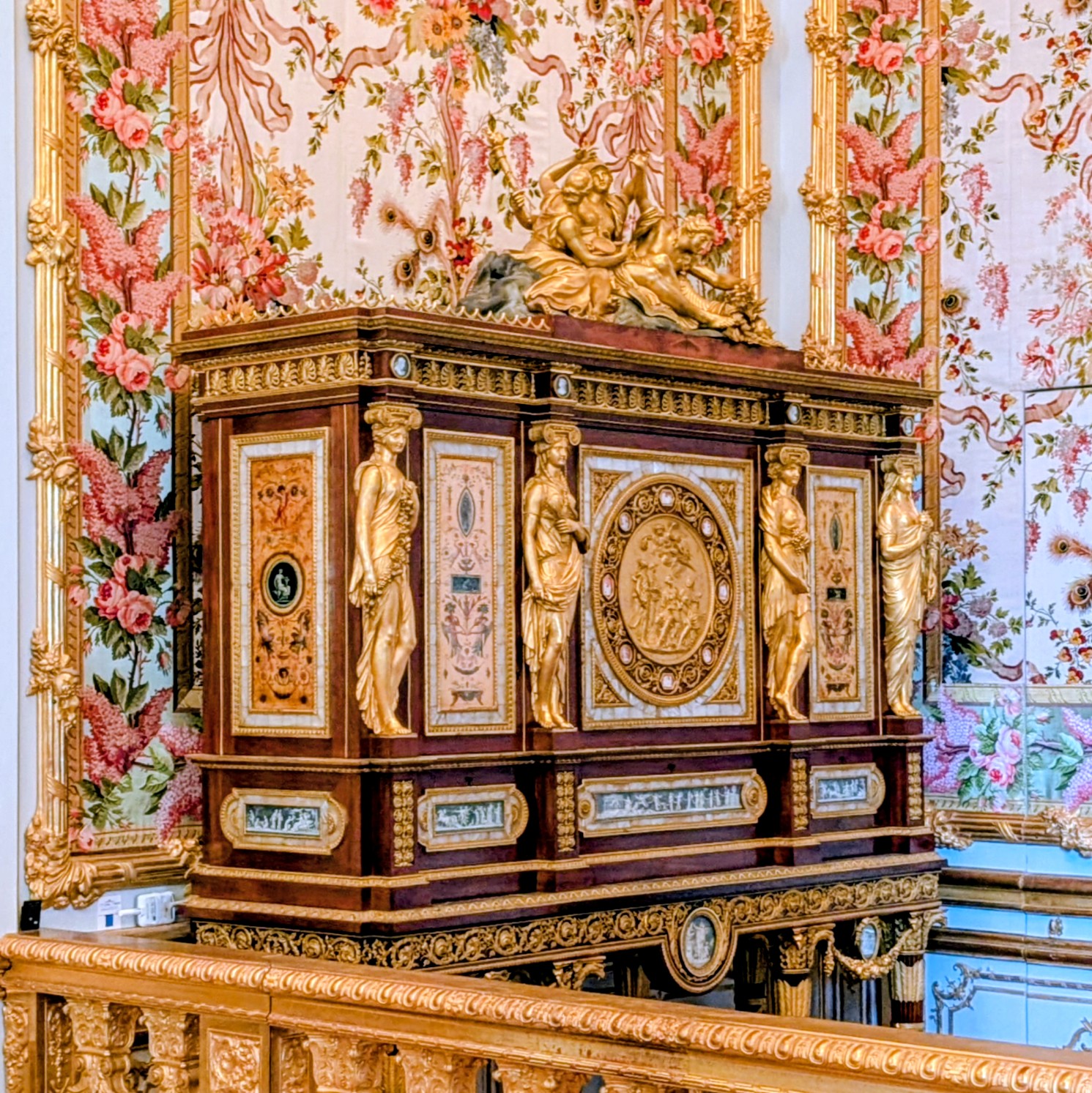
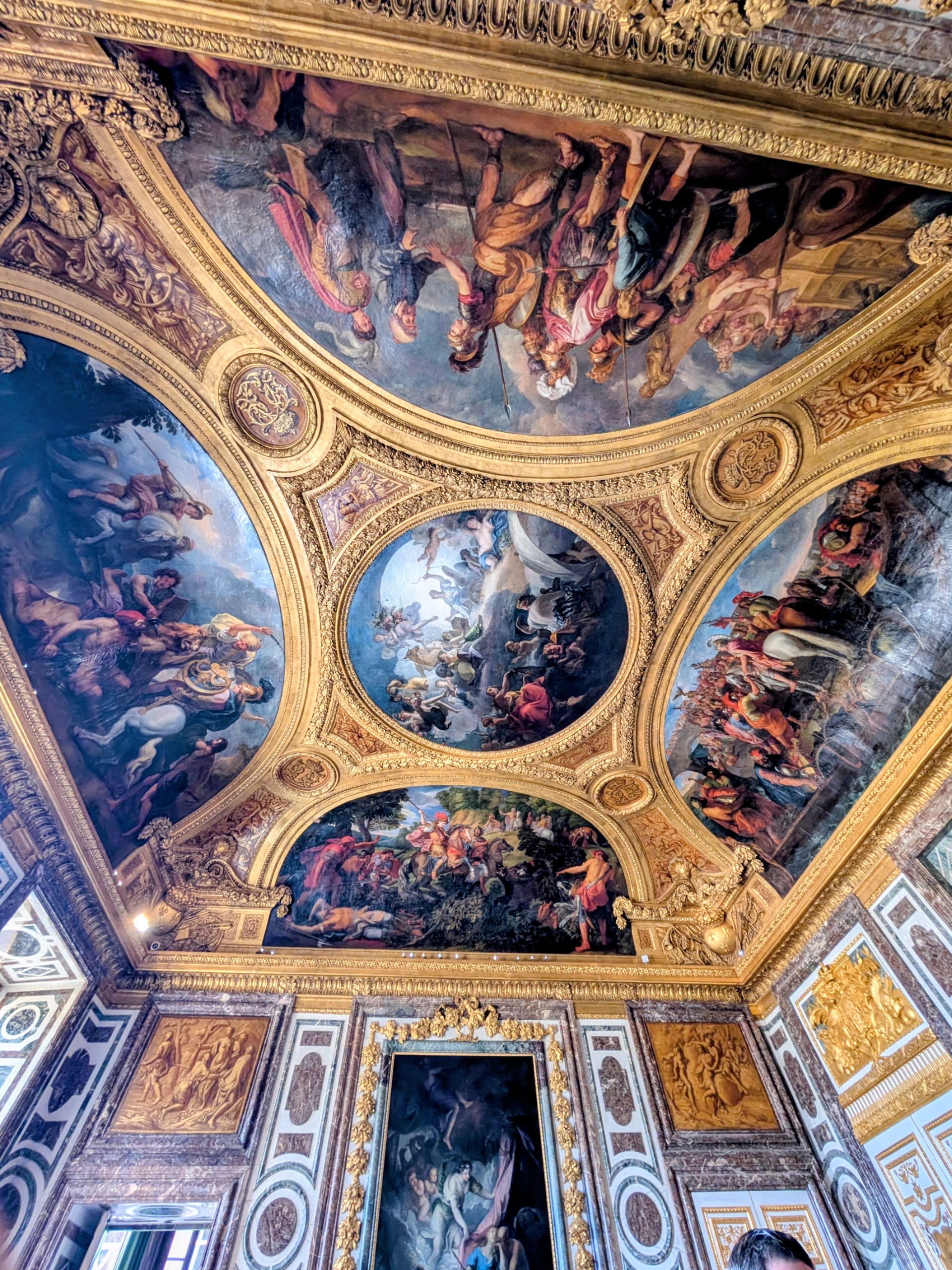
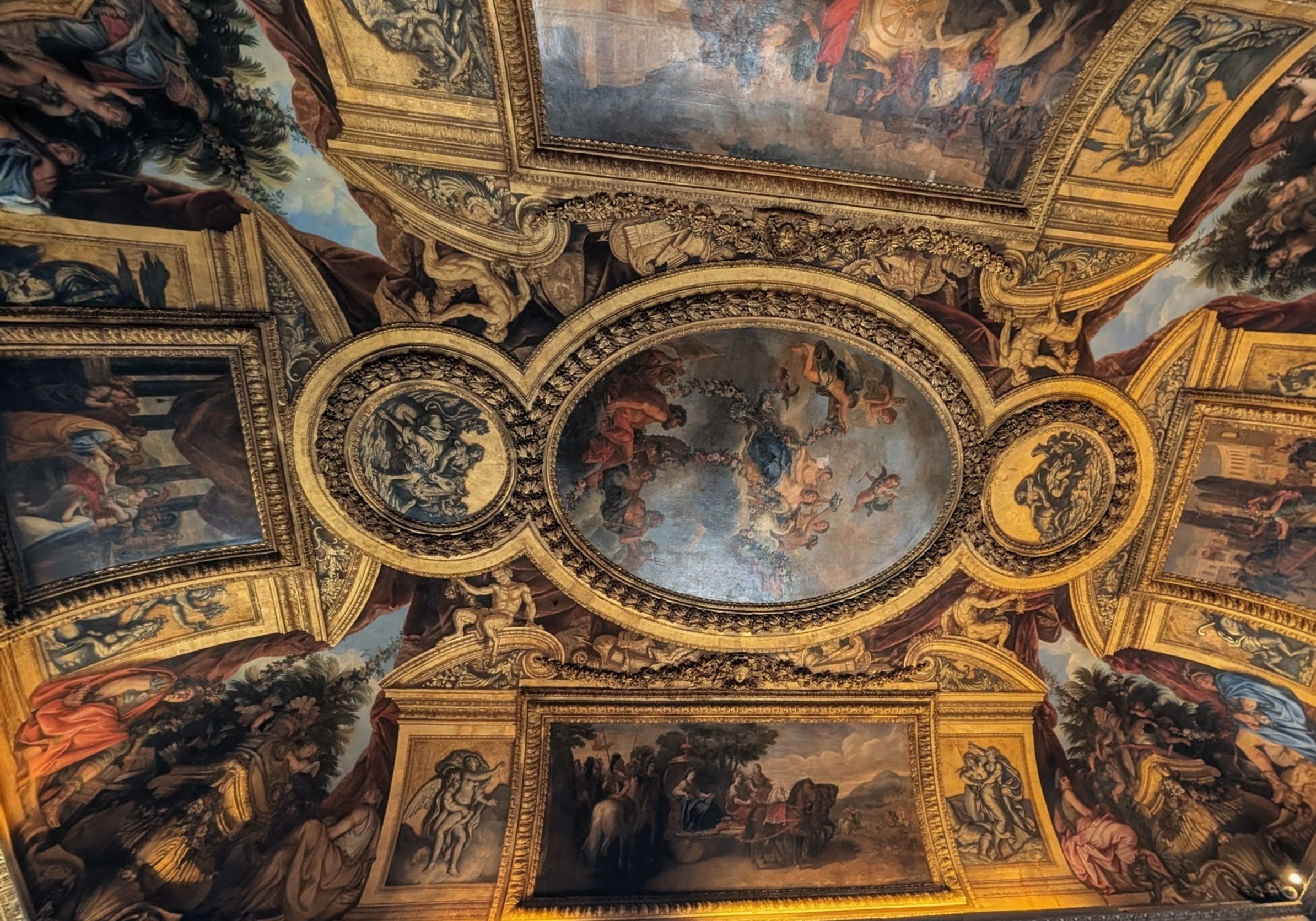
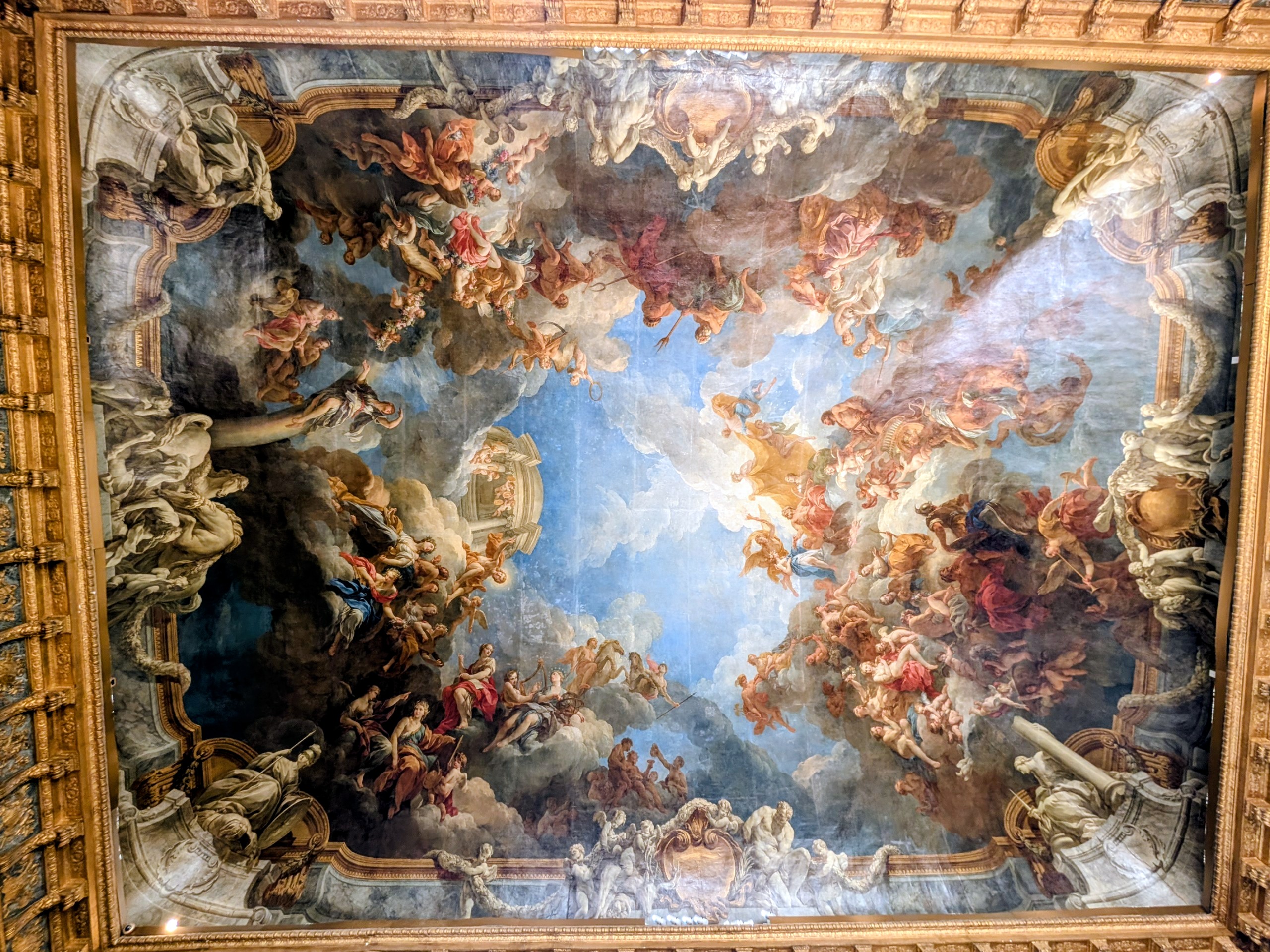
The ceilings depicted mythical gods that were metaphorically depicting the power and scope of the king’s influence plus military victories and other stuff. No popcorn ceilings for Louis.
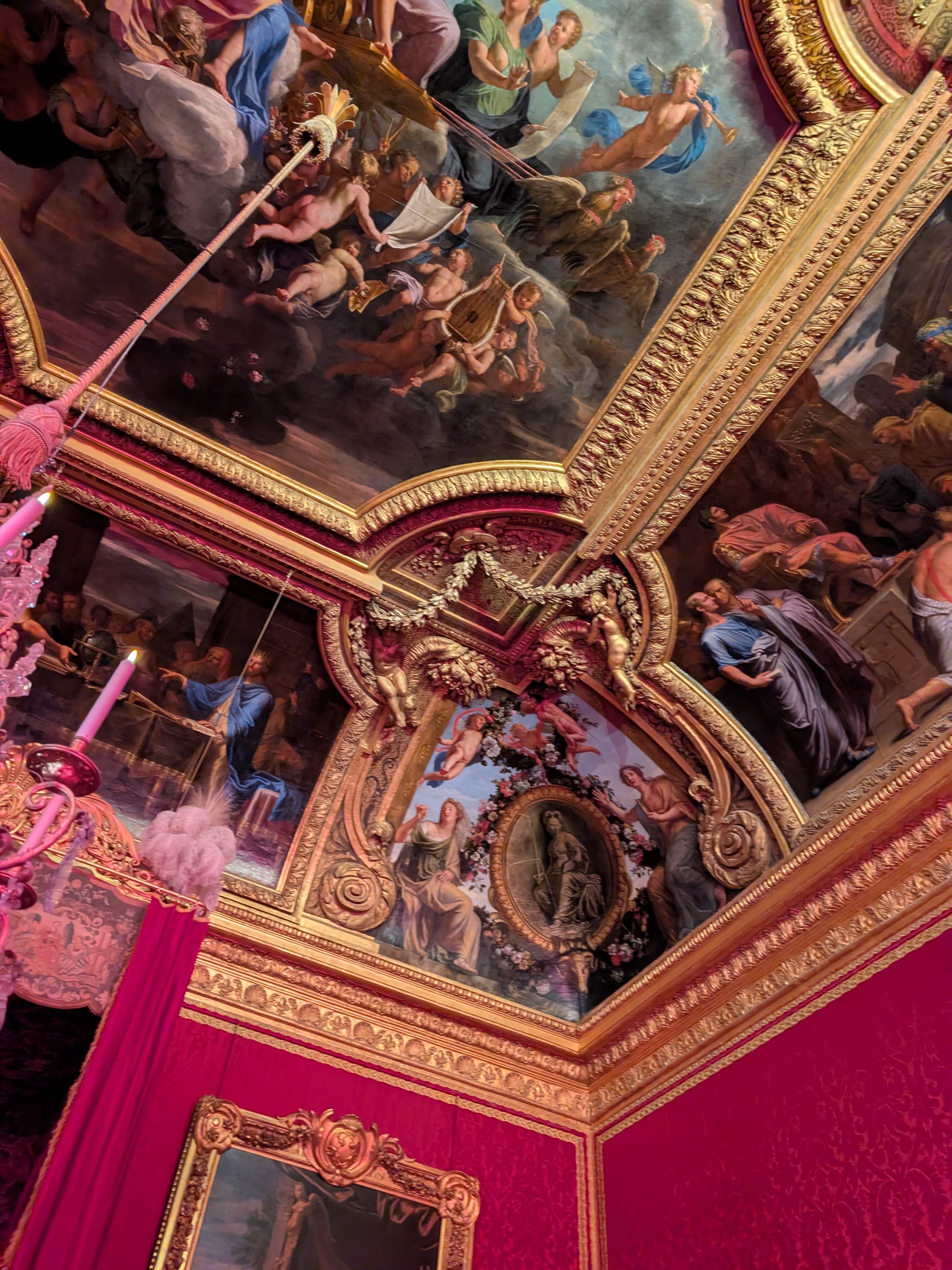
The queen opted for just pretty, although she couldn’t lie in bed and admire it if you think about it, with the canopy overhead blocking the view.
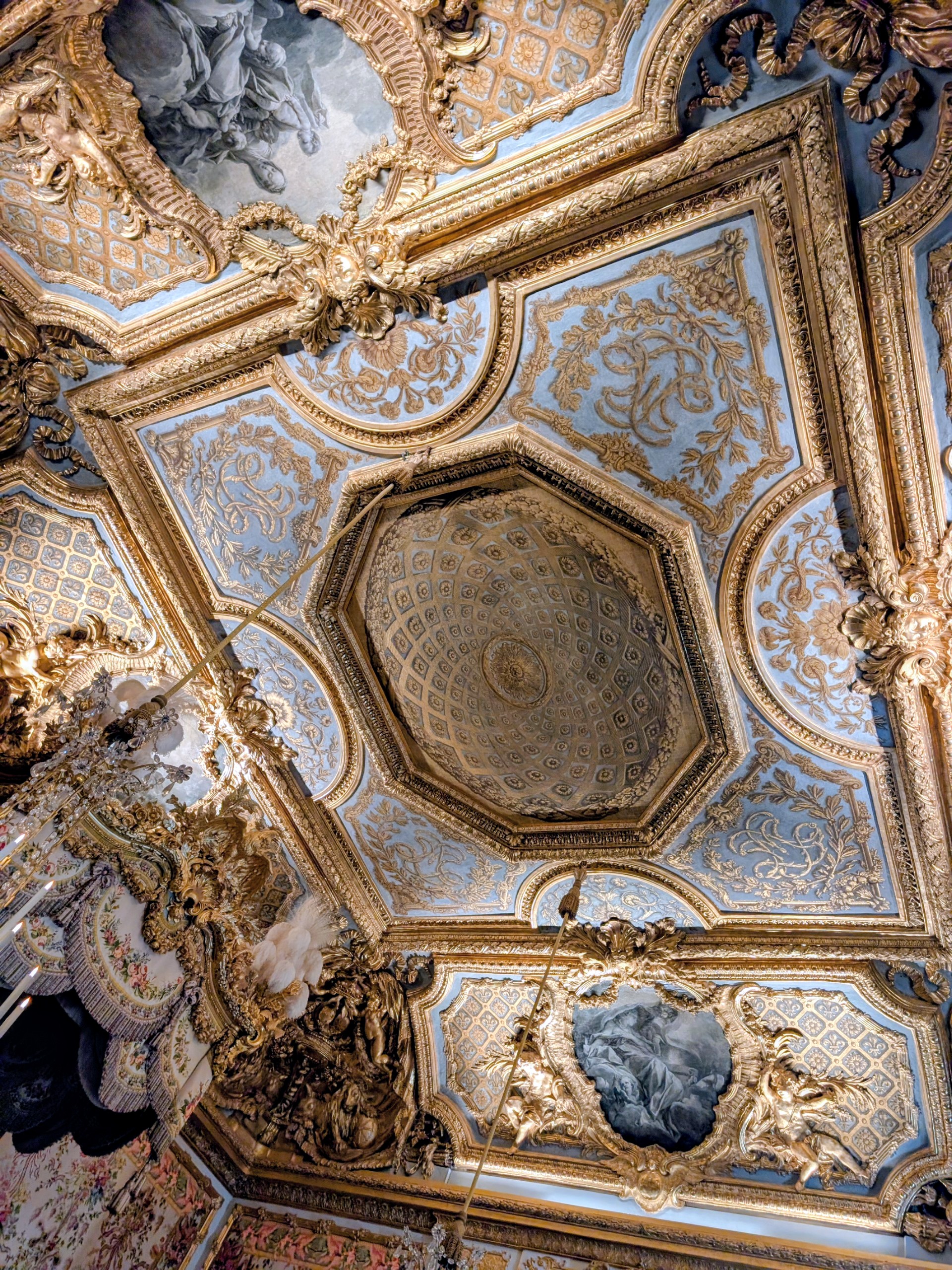
Are you sensing sarcasm? What do you expect? If the proletariat had had a chance to see the decadence sooner, my guess is that the revolution would have predated the one in the US colonies by many years. Although there wasn’t enough critical mass in the poor classes to launch that revolution until the late 18th century, when the bourgeoisie also grew restless.
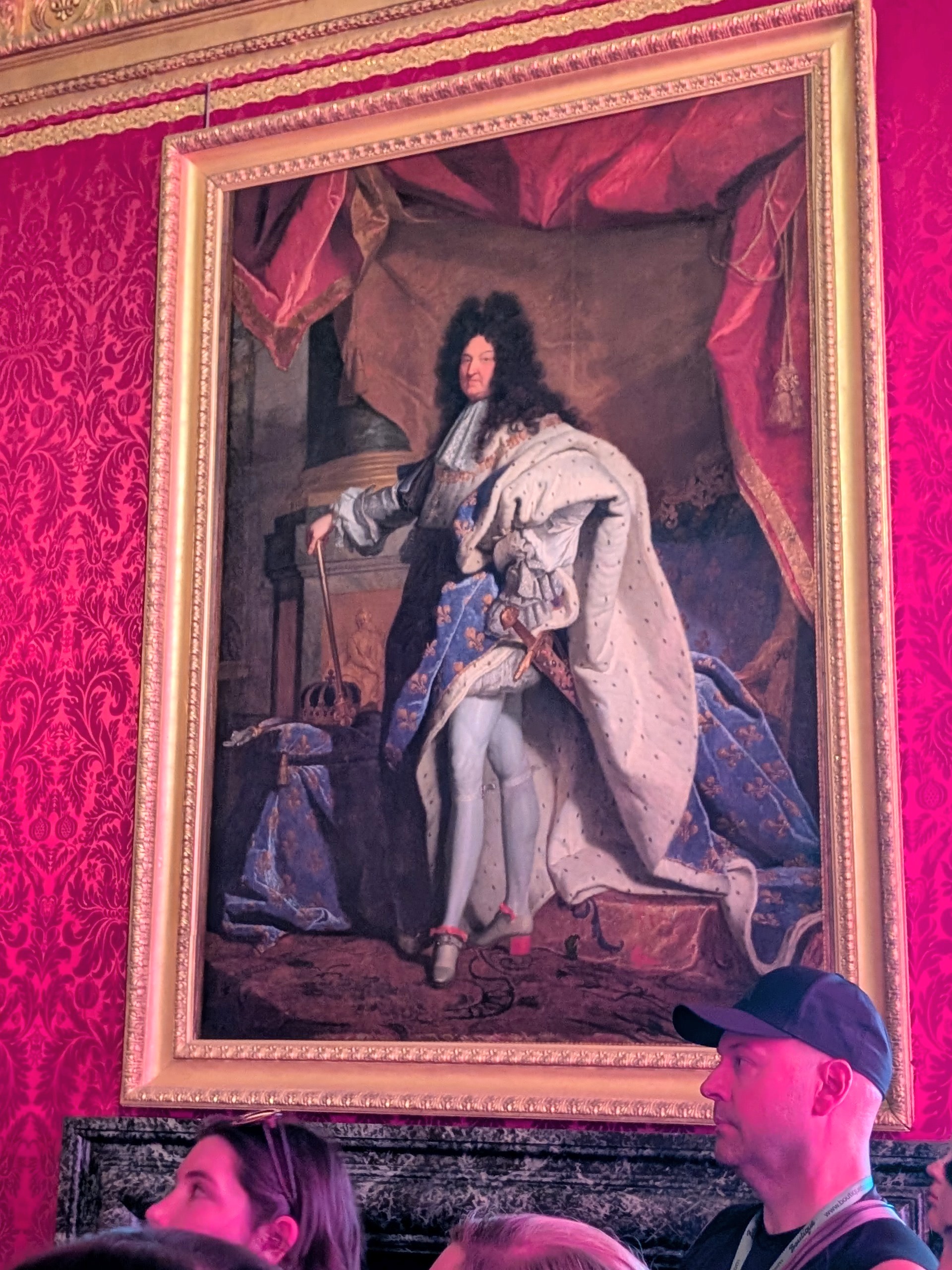
The statues are not the only works of art depicting royalty in less-than-real appearance. Paintings show the women at child bearing age whether they are 30 or 60. The men are shown in trim figures with wigs or with long, flowing hair that field workers could never tolerate,. Here are Louis XIV with big hair, 18th century style; Marie Leszczyriska (big skirt), queen in Louis XV’s reign, Marie Antoinette with the kids, and King Louis XV (depicted as old and wise in white wig) who actually died at the age of 38.
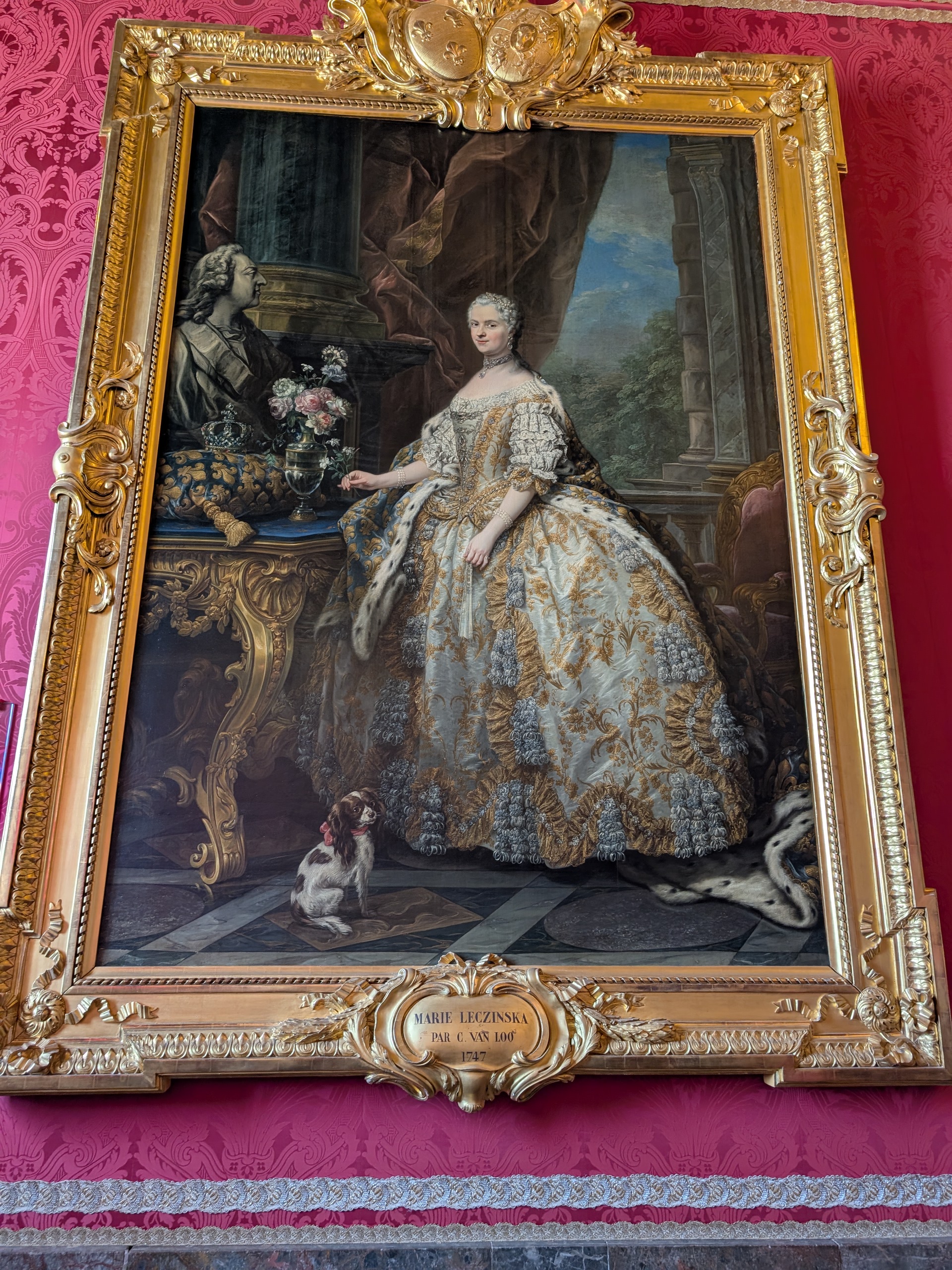
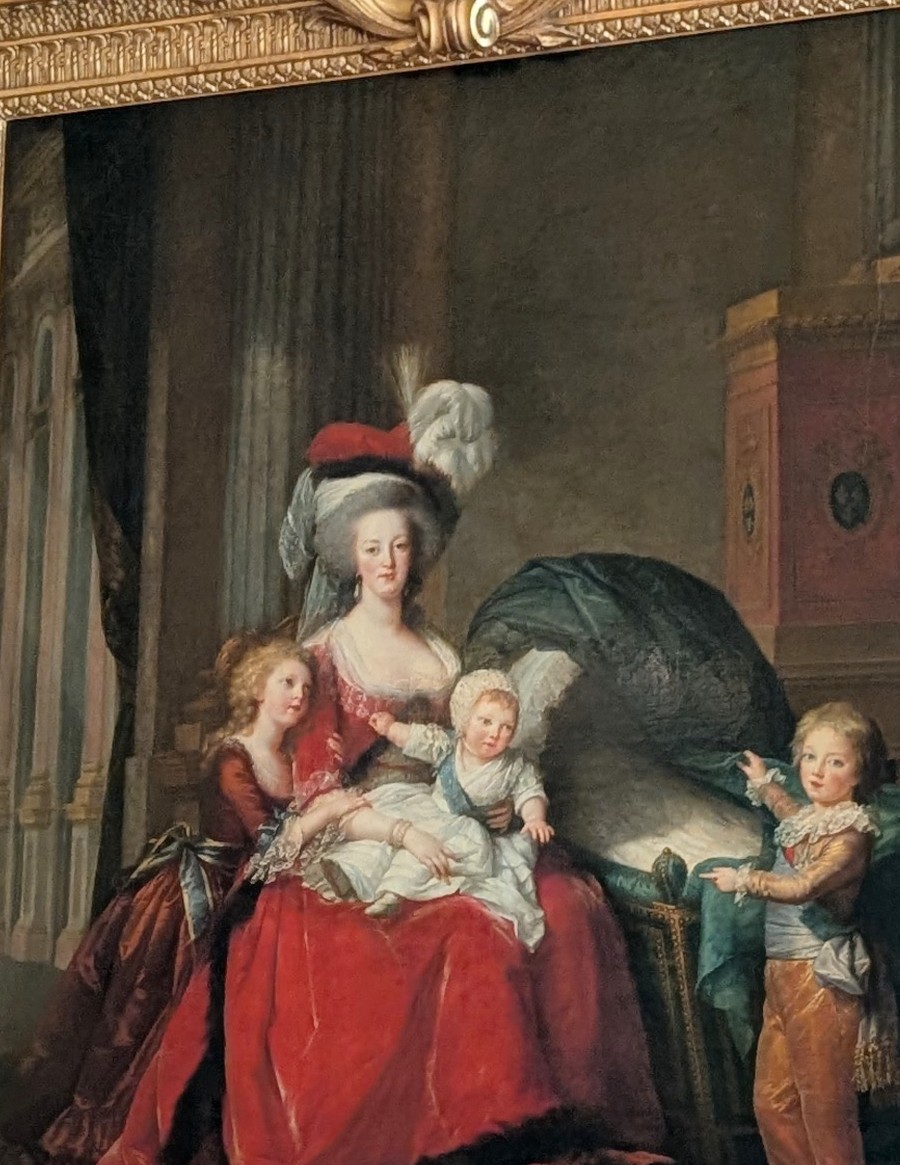
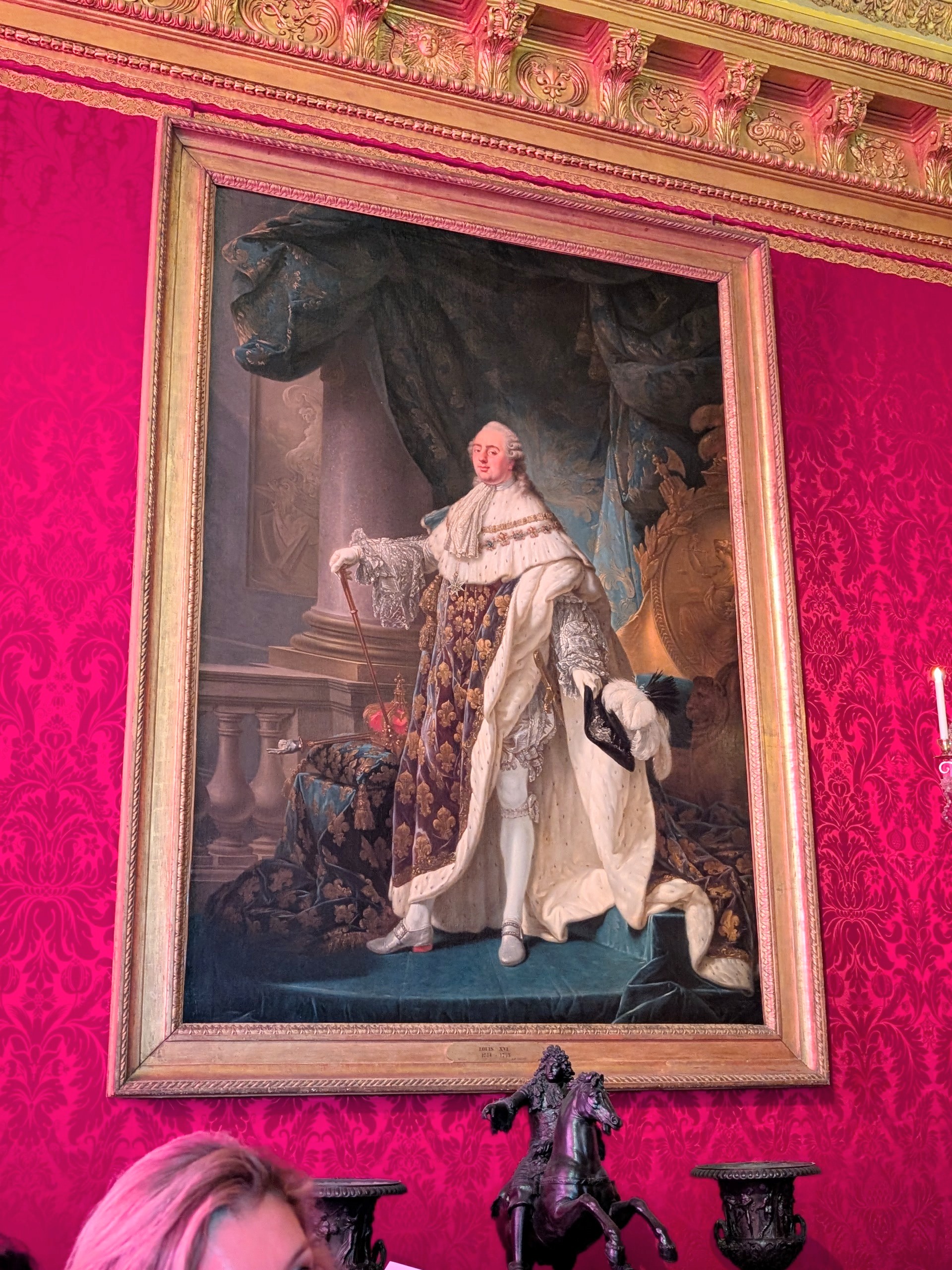
The French people had a love/hate relationship with Marie Antoinette. She insisted on being with her children herself, which seemed endearing at first, but then was considered unqueenly. Plus she started to really enjoy spending money, so that alienated her from the people more.
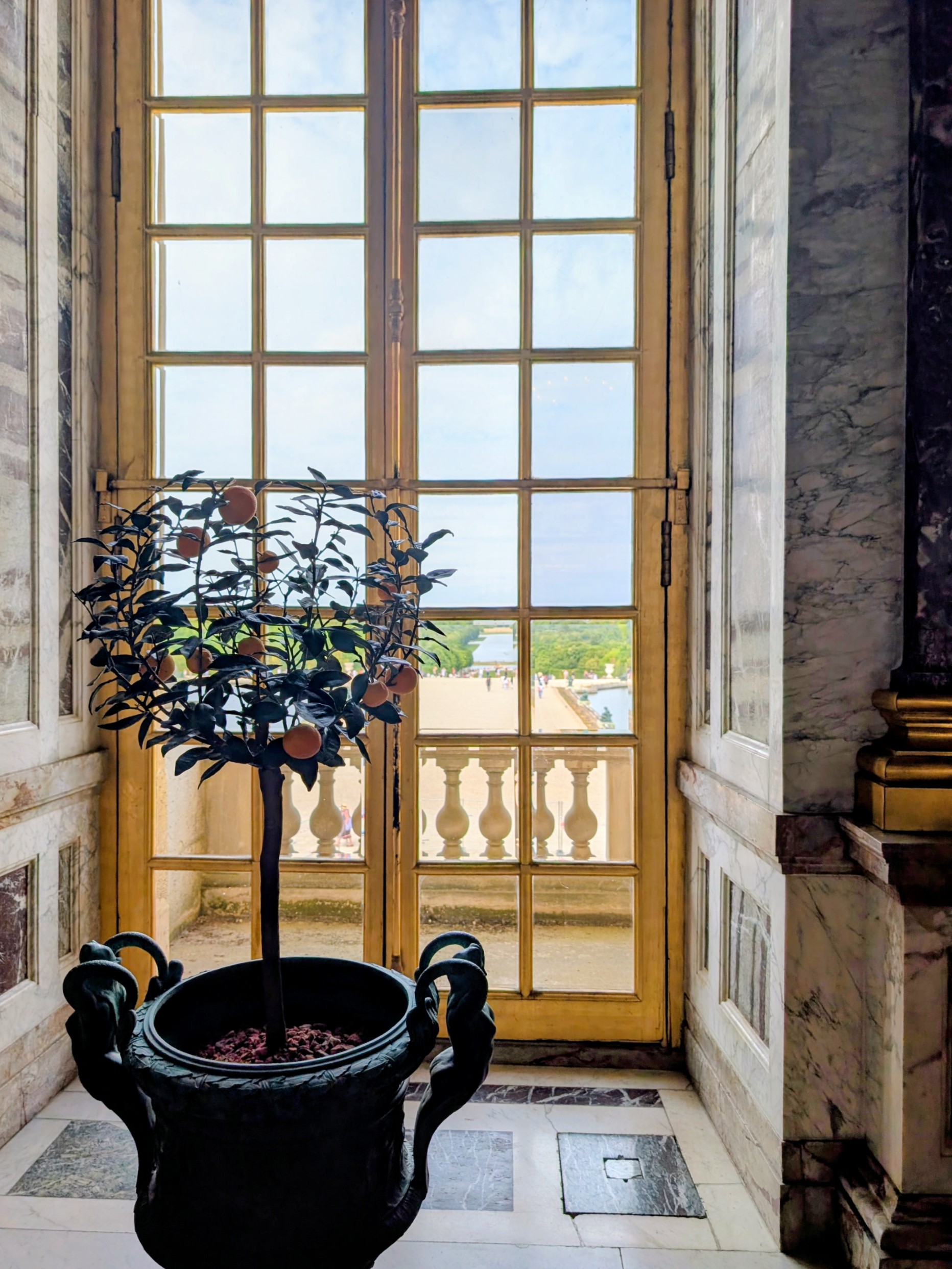
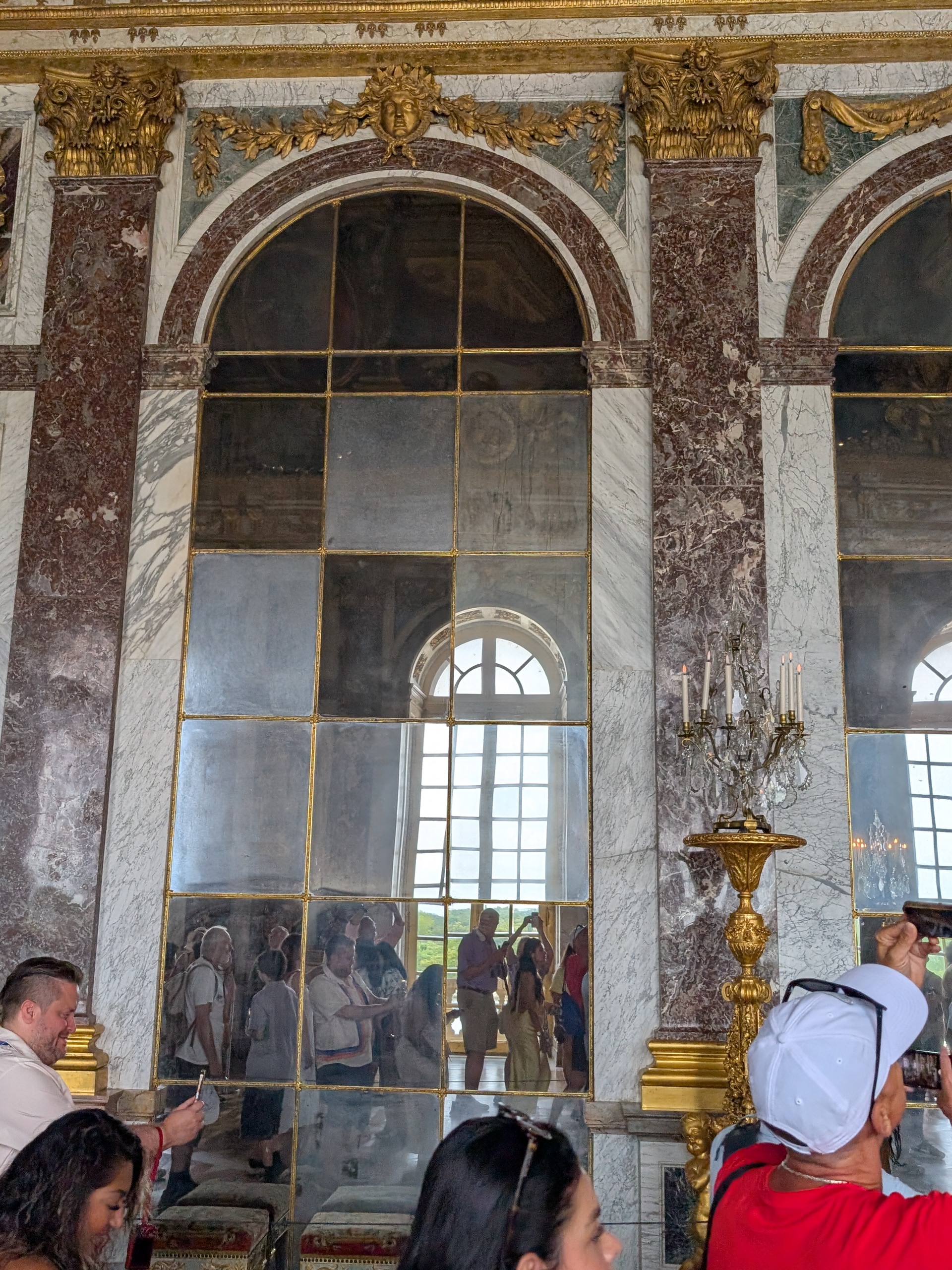
When I visited Versailles with our daughter about twenty years ago, the Hall of Mirrors was closed for renovation. It was fun to see it this time, with its mirrors reflecting the view of the gardens outside, a huge ballroom for all the nobility and royalty to enjoy.
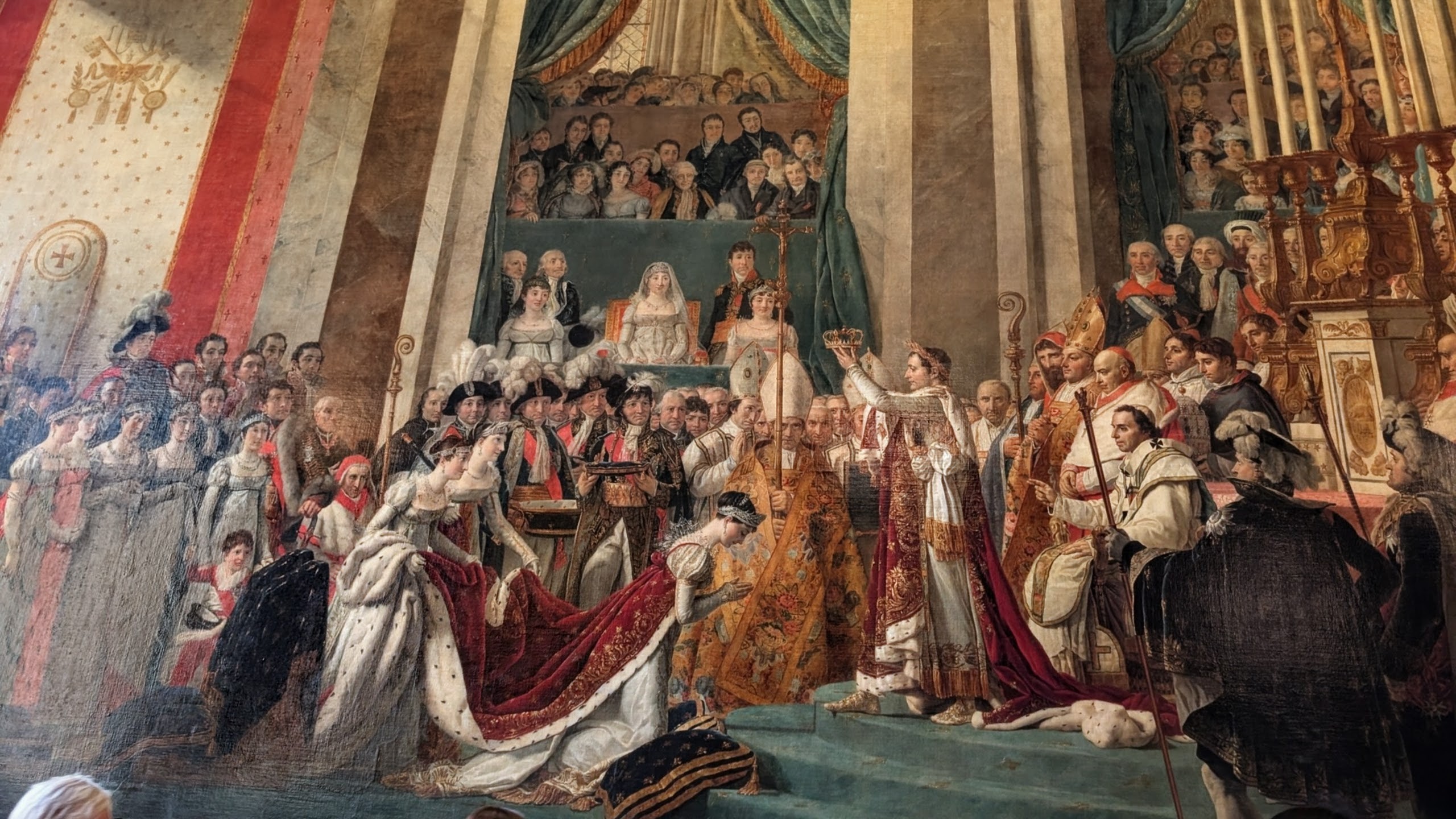
The Coronation of Napoleon is a large (33 ft by 20 ft) painting done by Jacques-Louis David. Commissioned by Napoleon himself, the original was first hung in Versailles, but was eventually transferred to the Louvre in Paris. Once it left the palace, American entrepreneurs commissioned a duplicate by David, which he completed in 1822 but was not returned to Versailles until 1947. The painting depicts the emperor crowning Josephine, but close inspection shows that it originally had him holding the crown over his own head. The pope was present merely to give his blessing.
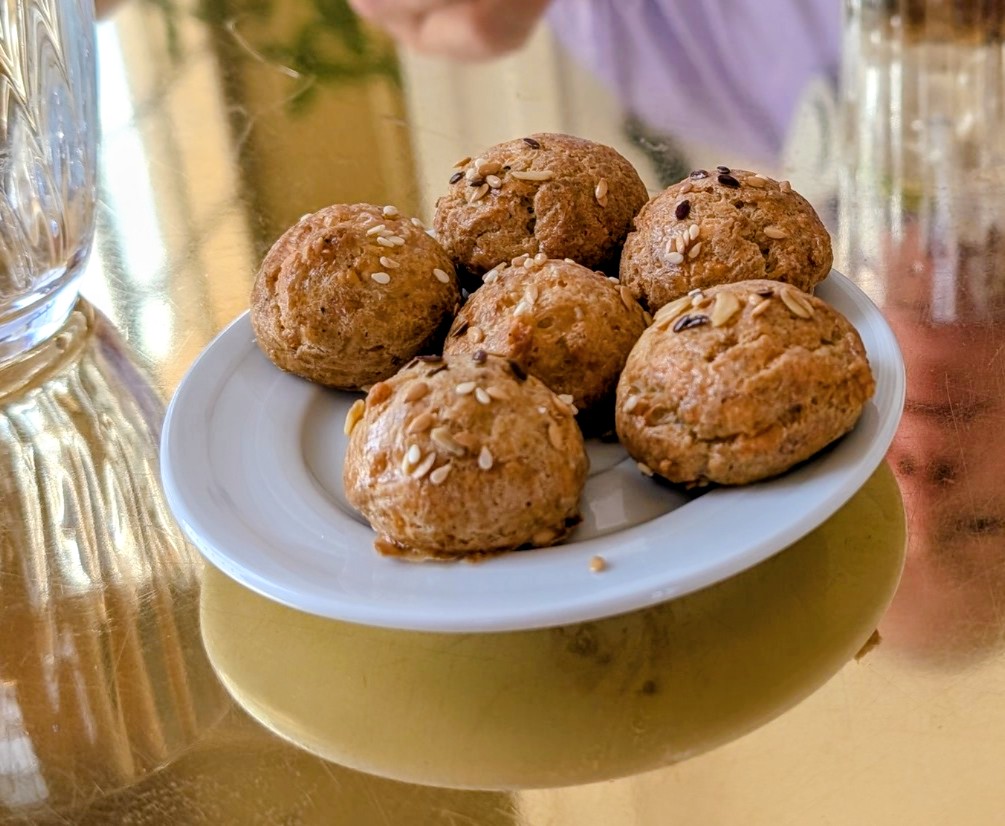
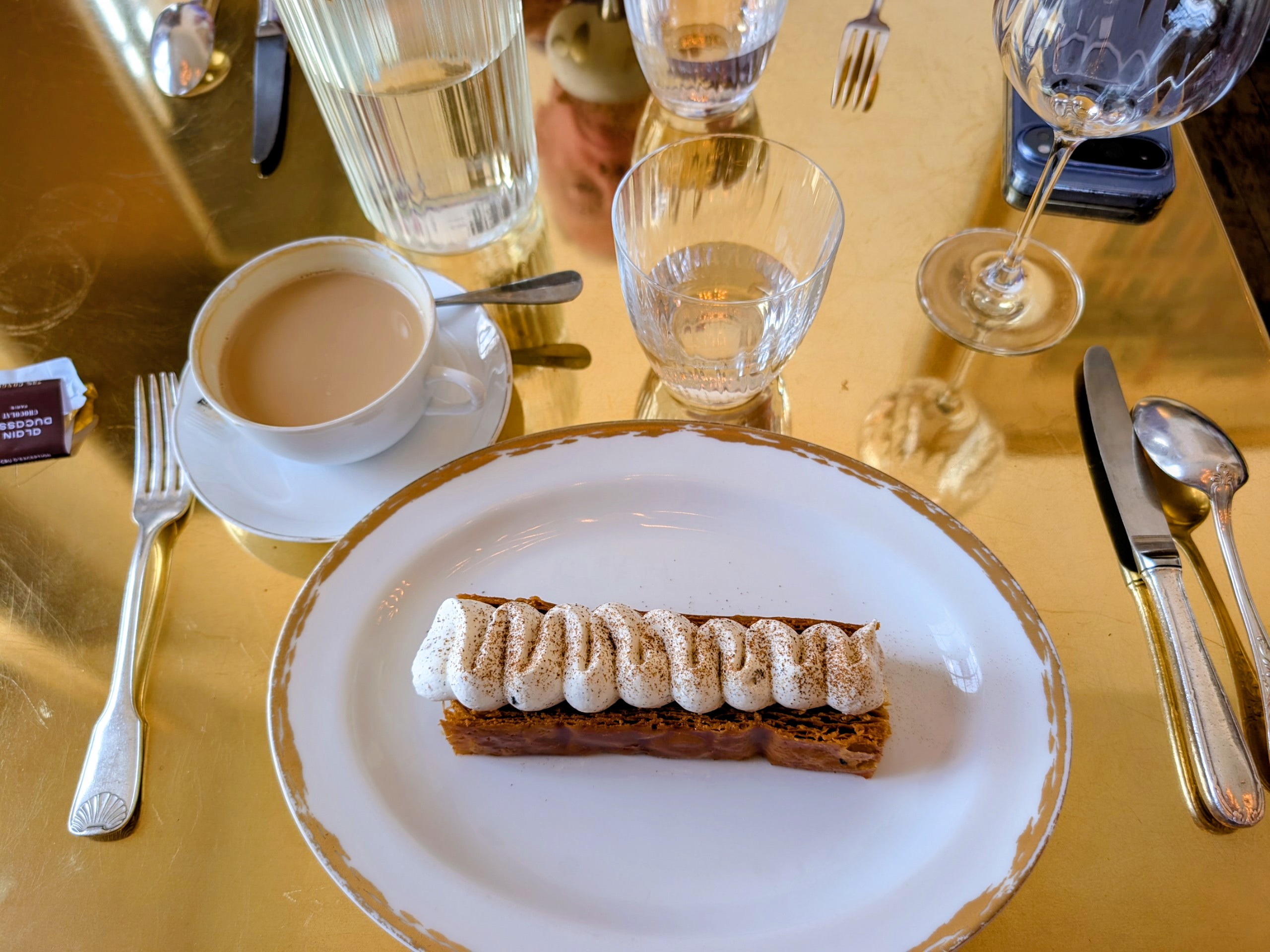
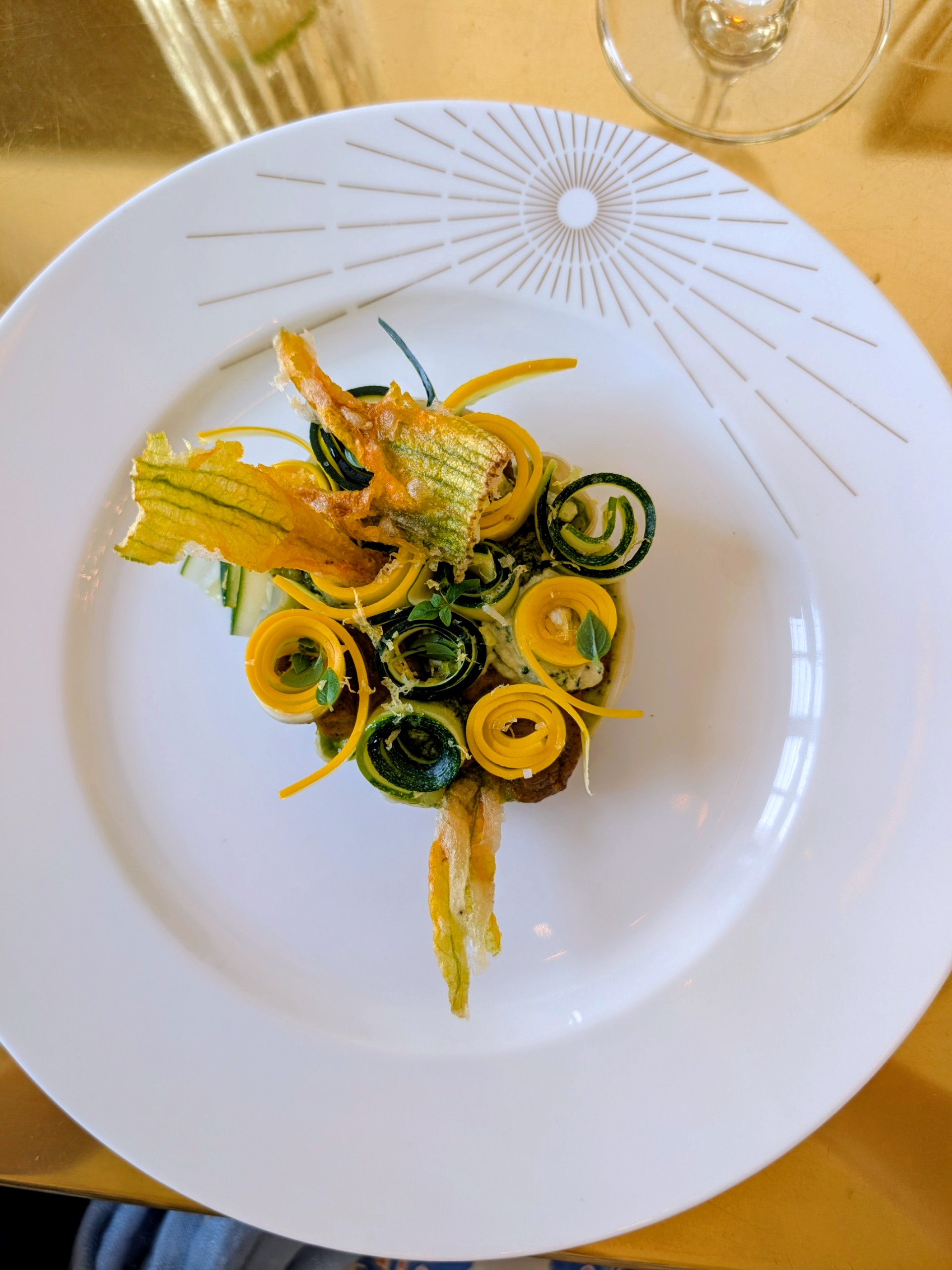
When our tour ended, we opted to dine at the indoor restaurant with “French air conditioning” as Dunya called it–a nice breeze from an open window. We savored every bite of the exquisite cuisine. The meal included tiny, cheesy cream puffs I must try to duplicate and for me, a zucchini/ewe’s curd/basil pesto tart, and millefeuille for dessert.
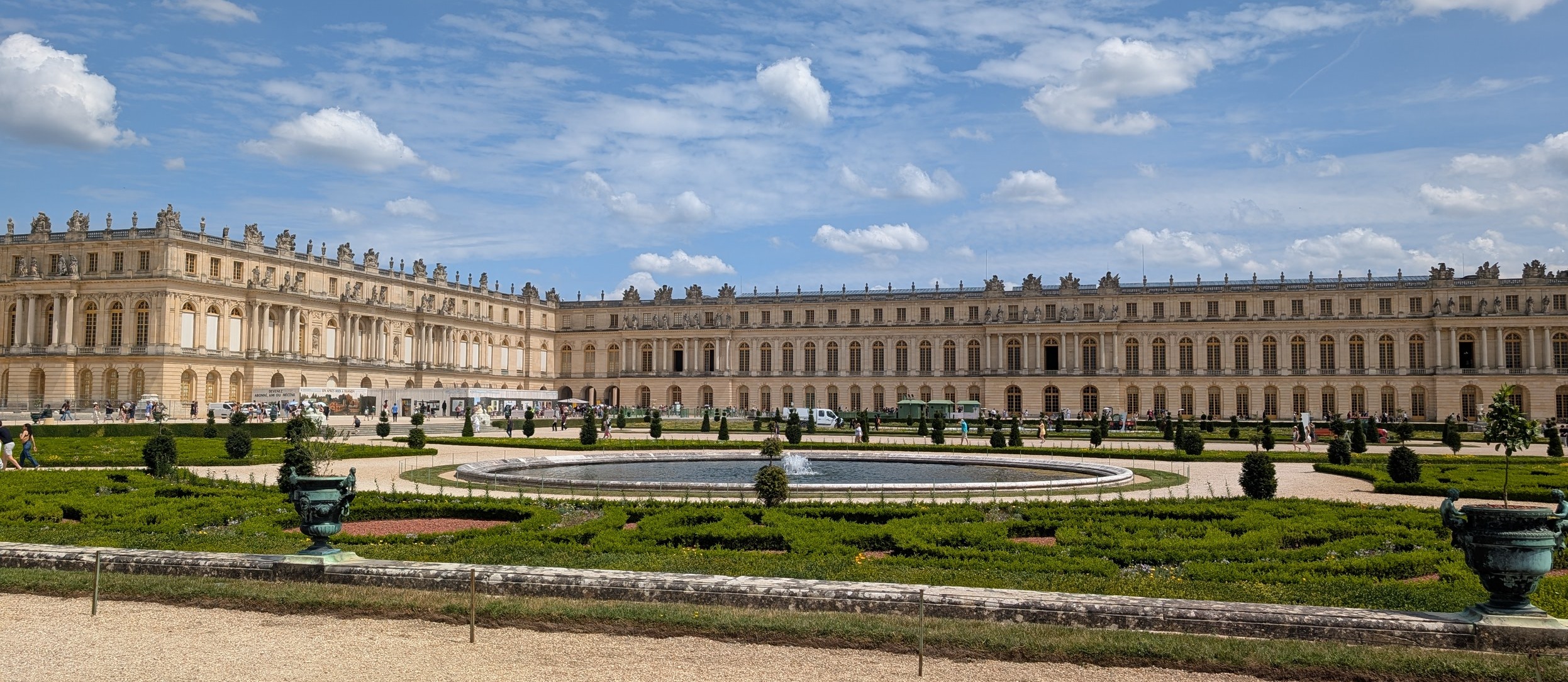
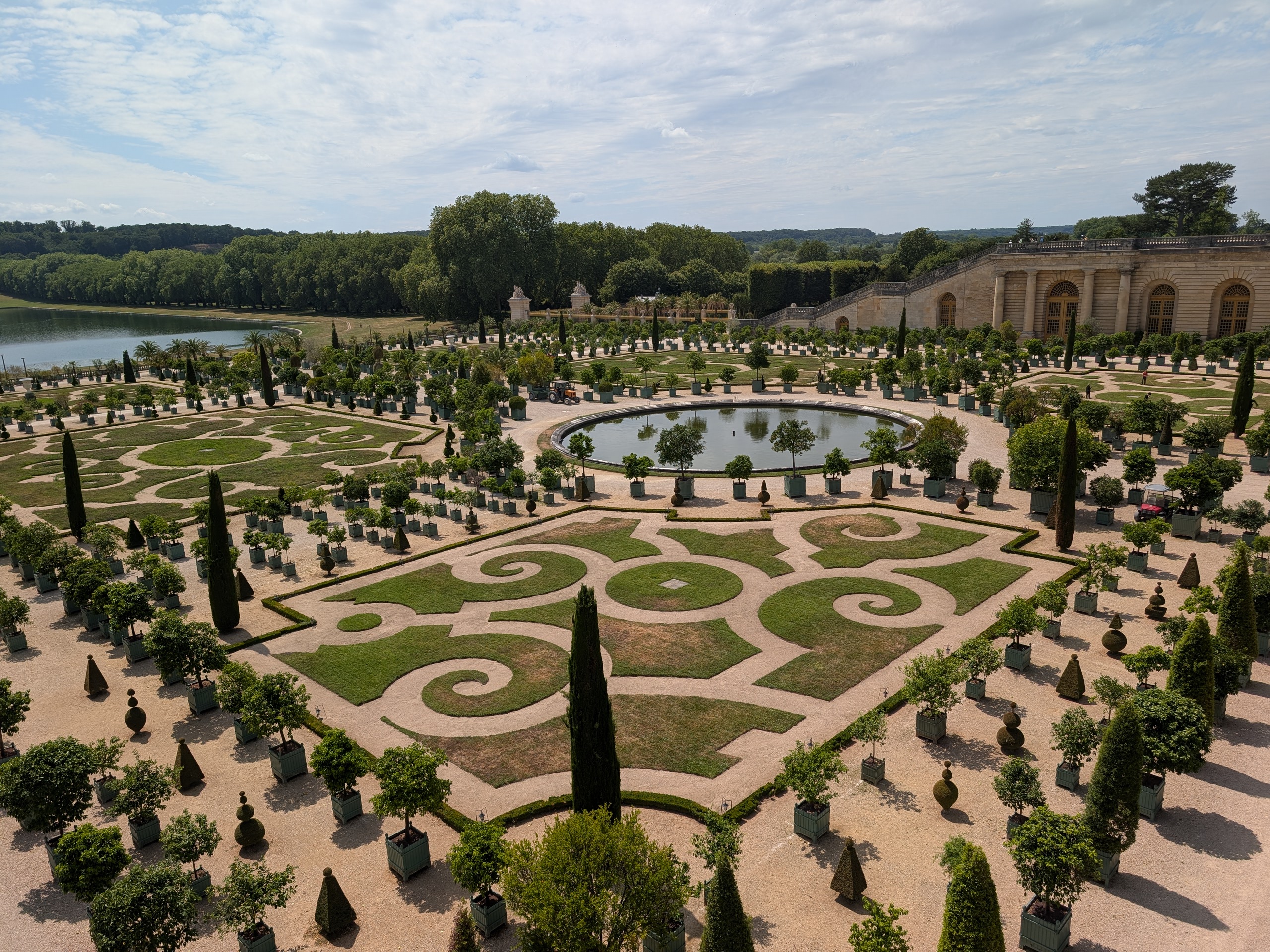
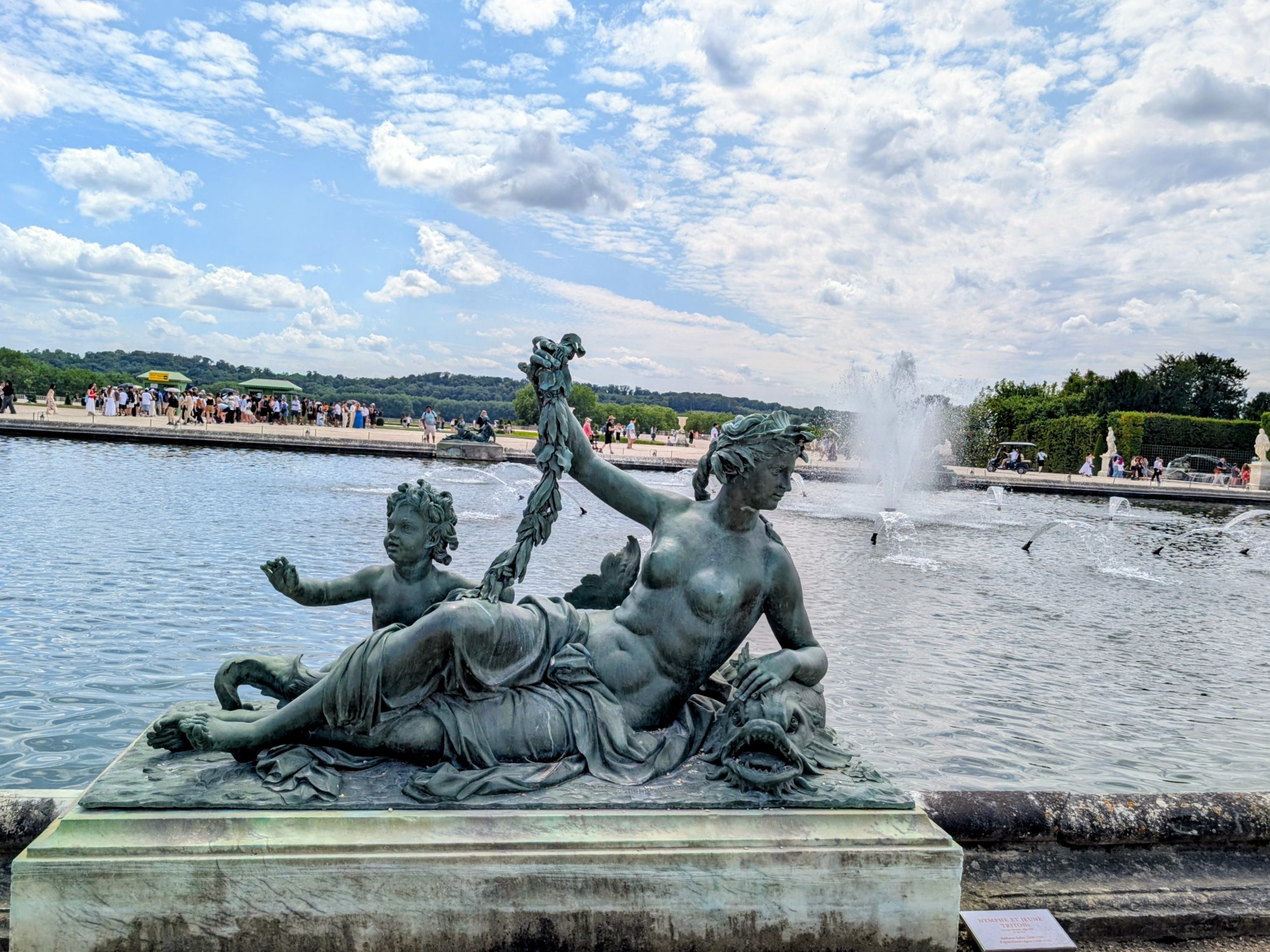
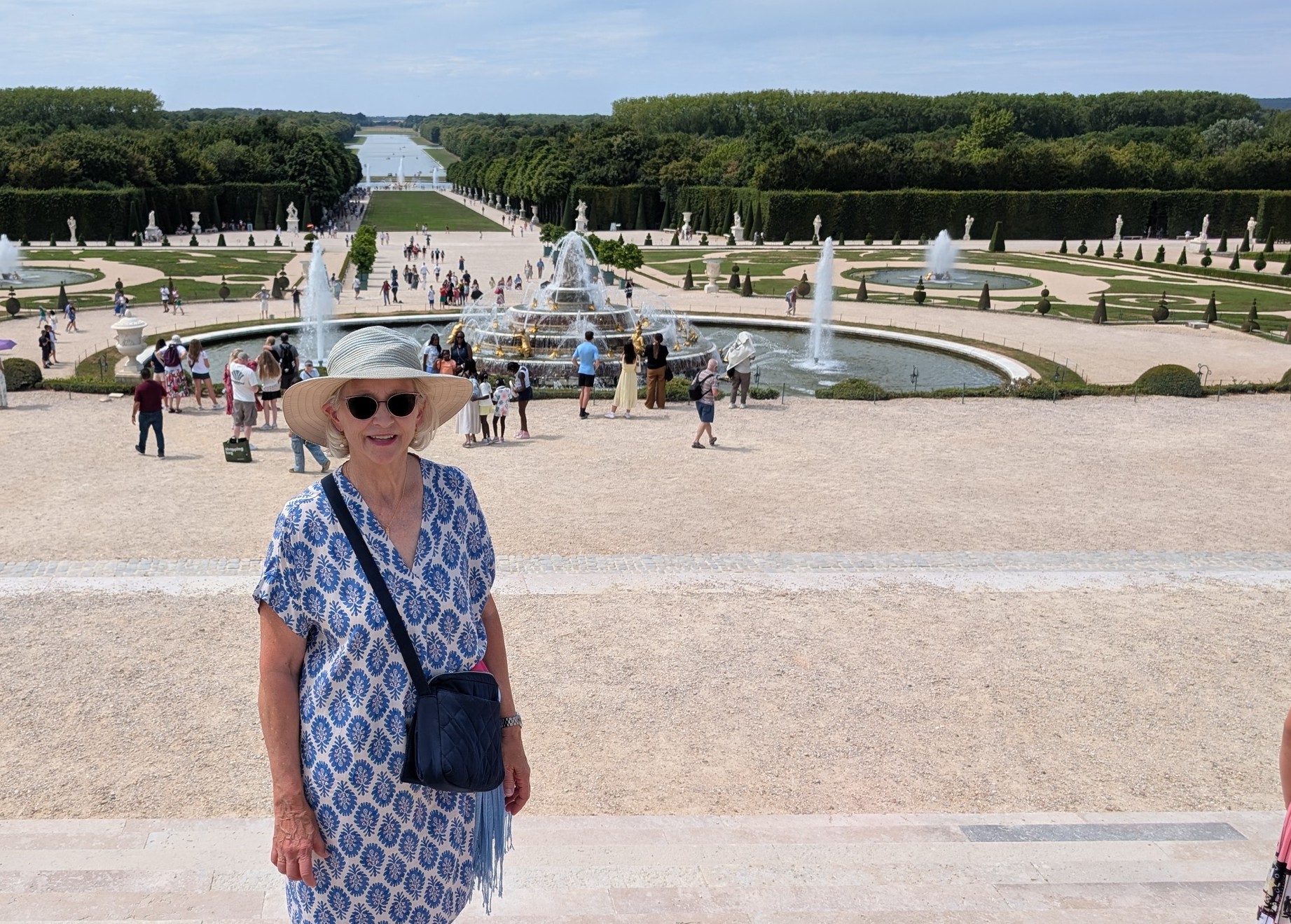
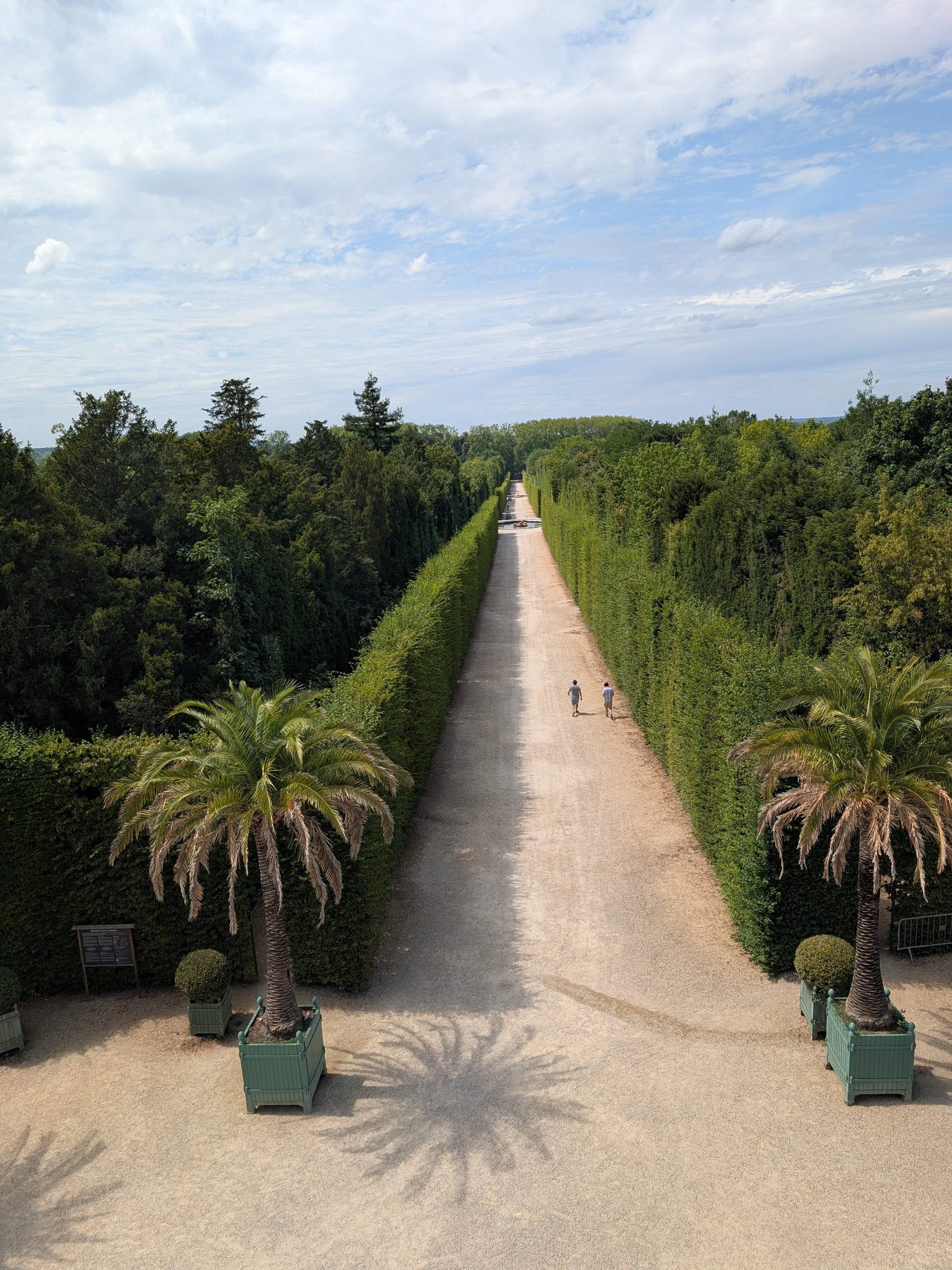
The gardens of Versailles are almost as impressive as the palace itself. They feature a grand canal, over 400 statues, groves, gardens in the French formal style, hundreds of fountains and the queen’s hamlet–a fairytalelike village built for Marie Antoinette. It covers 77 hectares in a larger 850-hectare park. (A hectare is 100,000 square meters.) I only got a glimpse of the “backyard” of the palace, having spent enough time on my feet for one day.
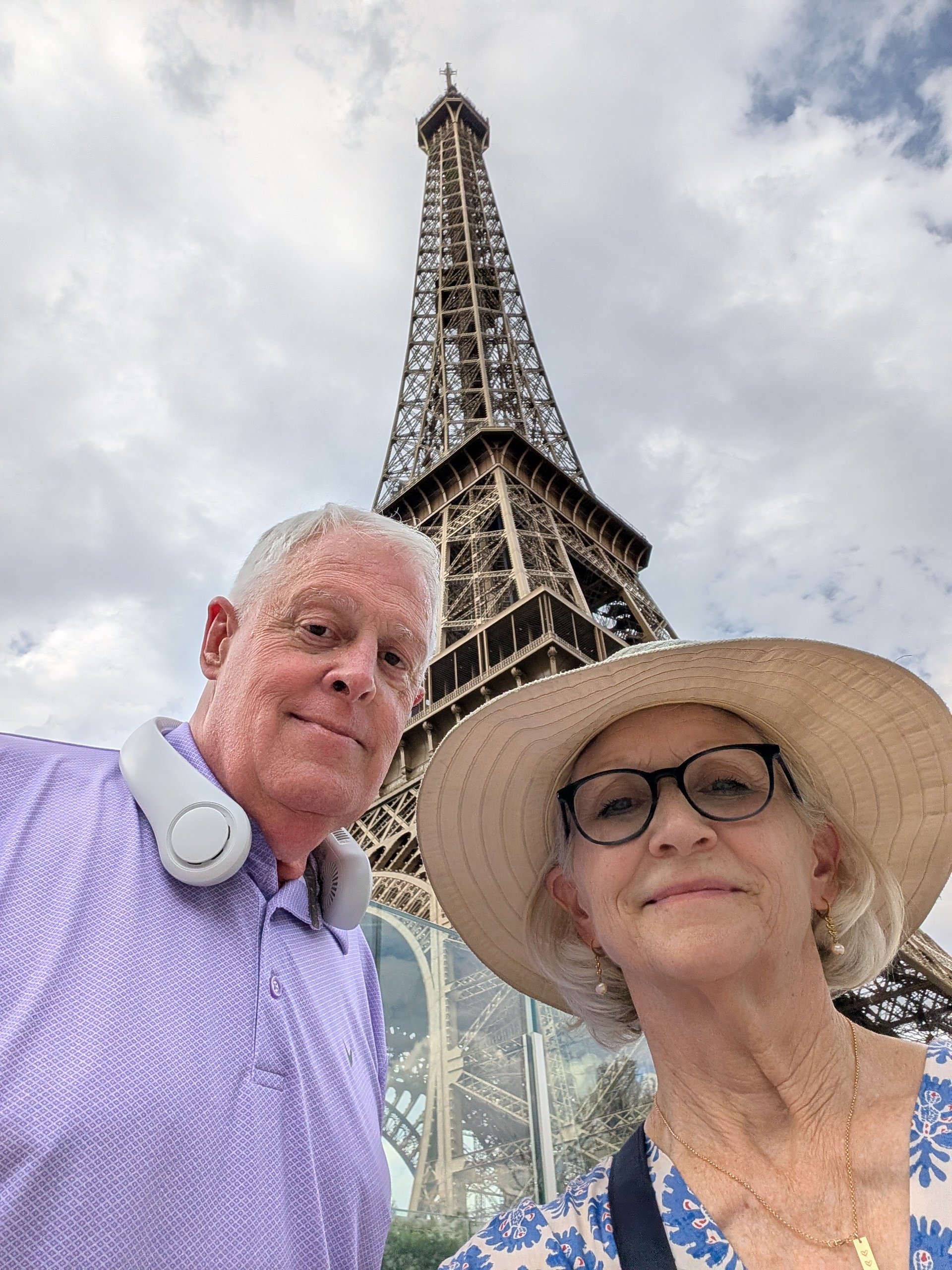
We returned to Paris by train and chose to disembark near the Eiffel Tower. We had not purchased tickets to go up, since we were not sure of our schedule that day, and it is time consuming. But it was fun to get up close and get the scale of it. The last time I was in Paris, we could walk underneath, but it is now walled off for security. I have been to the top a couple of times, and Dean says, “Next time, we’re going up!”
We had our last Parisian meal at Jacques in our neighborhood, a final verre de vin and one more croque monsieur avec huile de truffe, a humble broiled cheese and ham sandwich with truffle oil.
How do I conclude this travelogue? It was a unique opportunity to live in France at length in the company of people I love. I was able to use and improve my French language skills. There were many precious hours with our sweet granddaughter and her parents. I welcomed my husband after almost a month apart and enjoyed France’s oldest city–Marseille–with him. I made new friends.
I also experienced love in countless ways: the friendliness of shopkeepers like Olivier at FranPrix; joking with wait staff like Lily from Scotland who served us at our favorite tapas restaurant, Lulo Bar; glimpses of family life and romance; farmers proudly selling their produce in the market; the earnest work of all the people who rely on tourism like Uber drivers and museum staff and Airbnb hosts. Parents walking their children to school. Grandmothers with their petits enfants in the park. Cru staff and students making friends and having spiritual conversations. Congregants and clergy in their weekly worship and fellowship together.
And there was our elderly neighbor upstairs, who enjoyed Sydney’s antics. No language needed, only smiles. The lovely woman in the neighborhood fromagerie, the cheese store. (REALLY good cheese) The proprietor at my favorite primeur, or greengrocer. He gave me free cherries when he thought the broccoli I bought was a little past its prime. “Cook it today!” he advised.
I see this all, every bit of it, as a function of God’s love that binds us all together whether we recognize it or not. Whether we speak the same language or not. We can truly say “c’est la vie” in the best way. This is life wherever we take breath and share it with love. That is why I can smile through my tears at my sister’s passing later on the day I visited Sacré-Cœur, because I got to share this wonderful life with her.
So I dedicate this travelogue to you, my dear sister Lois. You loved travel and enjoyed hearing about my adventures. But you are experiencing life now in its unimaginable fullness. To you I say “À bientôt!” See you soon.

